Top 12 Best Jigsaw Cutter Hacks You Can’t Miss!
Trying to cut precise curves or straight lines with a low-quality jigsaw often leads to splintered wood, uneven edges, or a blade that breaks too quickly. The best jigsaw cutter must handle different materials cleanly without overheating or losing control, a balance that many cheaper models miss. Users familiar with repeated blade changes know how frustrating it is when the blade doesn’t fit securely or gets dull fast, dragging through the workpiece.
A reliable jigsaw cutter needs a powerful motor, typically around 500 to 800 watts, to maintain a consistent blade speed through hardwood or metal. Blade fit is crucial, universal T-shank blades reduce slipping and improve stability. Variable speed control and orbital action modes give flexibility depending on the material, while a sturdy base plate helps keep cuts straight and smooth.
Safety features like blade guards and easy dust extraction also improve handling during prolonged projects.
Need a Quick Check?
| Image | Product | Price |
|---|---|---|
Our Top Picks 1  | BLACK+DECKER BDEJS300C | Check Price |
Our Top Picks 2  | DEWALT DCS334B 20V Jig Saw | Check Price |
Our Top Picks 3  | SEESII 500W Corded Jig Saw | Check Price |
Our Selected Top 12 Jigsaw Cutter Worth Considering
This list features carefully chosen jigsaw cutters known for their quality and performance. Each review explains how the tool works, who it is best suited for, and highlights its advantages and disadvantages to help you make an informed decision.
1. BLACK+DECKER BDEJS300C Jig Saw
Lightweight and easy to handle, this jigsaw offers a compact solution for cutting wood, metal, and more. Best suited for users who want a balance of power and precise control in a tool that doesn’t get tiring to operate. Its smooth variable-speed motor stands out as its biggest strength.
Setup is straightforward thanks to the quick-clamp blade changes, requiring no tools to swap blades. Daily use benefits from the adjustable shoe that holds steady during cuts and the built-in dust blower that keeps your line of sight clear. The corded design means no worries about battery life during longer projects.
It also cuts at angles up to 45 degrees to handle bevel cuts.
Performance is solid with a 4.5 Amp motor delivering up to 3,000 strokes per minute, cutting through various materials without trouble. The lightweight feel and reduced vibration make it comfortable to use for extended periods. The wire guard helps maintain visibility, a praised feature.
Some note that the power cord limits portability and workspace flexibility during outdoor or large-area jobs.
Smooth cutting speed and easy blade replacement get the most praise for making work faster and less frustrating. The main complaint revolves around the cord, which can restrict movement in bigger workspaces or outdoor settings.
Best for those needing a reliable, lightweight jigsaw for varied materials at home or the workshop. Users seeking cordless freedom or extra heavy-duty power might want to look elsewhere.
Pros
- Easy, tool-free blade changes
- Lightweight for better control
- Built-in dust blower keeps cuts visible
- Adjustable shoe adds stability
Cons
- Cord limits portability on large jobs
- Power may feel limited on very tough materials
| Specification | Details |
|---|---|
| Power Source | Corded Electric |
| Motor | 4.5 Amp |
| Stroke Length | 3/4 in. |
| Speed | Up to 3,000 spm |
| Cutting Angle | 45 degrees |
2. DEWALT DCS334B 20V MAX XR Cordless Jig Saw
Great for those needing a cordless jig saw with extended runtime and solid control, it stands out thanks to its brushless motor. Compact design fits comfortably in hand, making it suitable for detailed cuts where precision matters most.
Setup is straightforward with an all-metal, lever-action keyless blade change that simplifies swapping blades fast. The bright LED light shines on your work surface to keep cuts visible in low light. A variable speed trigger and dial help dial in the speed you want for different materials.
It cuts efficiently with a powerful 20-volt brushless motor and supports orbital action in 4 positions for varying cut quality. Built tough with a metal shoe that adjusts easily up to 45 degrees, it’s made for reliability. High marks go to its comfortable grip and runtime, while some people note the dust blower could be a bit stronger.
The brushless motor delivers longer battery life that’s noticeable during extended projects. The built-in dust blower keeps most dust away but sometimes doesn’t clear the cutting line entirely. Bright LED and precise speed control improve the work experience significantly.
This tool suits DIYers and professionals needing cordless freedom with control and good battery life. Those who want ultra-lightweight options or superior dust extraction might want to look elsewhere. It balances power and handling well for medium to heavy cutting tasks.
Pros
- Longer runtime with efficient brushless motor
- Compact size for better grip and control
- Bright LED light for dim work areas
- Quick, keyless blade changes
Cons
- Dust blower does not clear line fully
- Weight may feel slightly heavy for fine detailed work
| Specification | Details |
|---|---|
| Power Source | Battery Powered |
| Voltage | 20 volts |
| Wattage | 2000 watts |
| Cutting Angle | 45 degrees |
| Blade Shape | Rectangular |
3. SEESII 500W Corded Jig Saw
Working with wood, PVC, or thin metal often calls for a reliable cutter that can handle various materials with precision. For small DIY tasks and home repairs, this jigsaw suits those who need a versatile tool with adjustable speed and angled cutting capabilities. Its strongest point is the powerful 500W motor that keeps cuts smooth and consistent.
Setting up involves simply plugging it in and choosing the right blade, thanks to the tool-free blade clamp that makes swaps quick. The adjustable speed dial lets you control the pace between 0 and 3000 SPM, helping you adapt to different materials without struggling.
The ergonomic handle feels balanced and comfortable to grip during longer cuts, while the metal shoe stays stable on surfaces and allows bevel cuts up to 45°.
Cutting performance matches what’s expected from a 500W motor, handling wood and softer plastics very well with smoothness and accuracy. The metal shoe adds stability and reduces vibration, which improves control. One common complaint is its cord limiting mobility compared to battery-powered jigsaws.
The build is solid but somewhat lightweight, which users might find easier for longer use but less durable under heavy-duty jobs.
The 500W motor delivers smooth and accurate cuts, while the metal shoe helps reduce vibration and stabilize the base for angled work. Several reviews mention convenience in blade changes but note the cord can get in the way during some jobs or tight spaces.
People tackling light to medium DIY projects or home repair will appreciate the balance of power and control. For those needing cordless freedom or heavy-duty cutting, a different jigsaw might be a better fit.
Pros
- Strong 500W motor for smooth cutting
- Variable speed suits different materials
- Tool-free blade changes for quick swaps
- Adjustable metal shoe for bevel cuts
Cons
- Corded design limits movement
- Not the best for heavy-duty tasks
| Specification | Details |
|---|---|
| Power Source | Corded Electric |
| Wattage | 500 watts |
| Speed | 0–3000 SPM Variable Speed |
| Cutting Angle | Up to 45 degrees bevel |
| Blade Shape | T-Shank |
| Voltage | 120 volts |
4. SEESII Cordless Jig Saw with Batteries and Charger

Running on two 21V lithium batteries, this cordless jig saw offers longer runtime without the constant need for recharging. Ideal for DIYers and professionals needing mobility and power in cutting various materials.
Its biggest strength is that it comes with extra batteries, so you’re rarely left waiting to resume work.
Setting it up is straightforward, with an ergonomic handle that feels comfortable during extended use. Blade changes happen quickly thanks to a thumb-push quick-release system, making swapping blades a one-push, one-pull task. The lightweight design helps reduce fatigue when working on vertical or awkward surfaces, while the keyless blade change adds convenience every time.
Cutting with this tool is accurate and consistent, whether beveling at 45 degrees or making straight cuts. It holds up well thanks to a brushed motor and solid build.
The jagged edges stayed clean with the blades included. Most users praise the long battery life and ease of blade replacement. The common complaint points to the tool using 2 D batteries, which might feel bulky or add weight compared to newer battery types.
Long-lasting battery power with two lithium batteries allows you to work without frequent interruptions. The quick-release blade system makes switching blades simple, enhancing workflow. The battery type may add some bulk compared to newer formats, which some users find less convenient.
Those needing a portable, cordless jig saw with long runtime will appreciate this model. People looking for a lighter battery solution or built-in dust control might want to consider other options.
Pros
- Includes two batteries for extended runtime
- Thumb-push quick-release for fast blade changes
- Lightweight and ergonomic handle for comfort
- Bevel capability up to 45 degrees
Cons
- Uses 2 D batteries which can feel bulky
- No mention of dust collection features
| Specification | Details |
|---|---|
| Power Source | Battery Powered |
| Voltage | 21 volts |
| Number of Batteries | 2 D batteries required. (included) |
| Cutting Angle | 45 degrees |
| Wattage | 200 watts |
5. SKIL JS314901 6 Amp Corded Jig Saw

People who need a reliable jigsaw for woodworking or DIY projects will find this model especially useful. It suits those looking for straightforward power and precise control, with a strength in adapting to different cutting needs thanks to its orbital settings.
It handles various materials with a smooth cutting action.
Setting up the tool is simple, and daily use feels manageable because of features like the 2-finger trigger, which offers better speed control. Adjusting the shoe bevel for angled cuts can be done quickly without extra tools, making angled work less of a chore. The dust blowing switch helps keep the cutting line visible, which adds confidence when following detailed patterns.
The jigsaw performs well across wood, plastic, and other materials, keeping cuts clean and precise. The build feels sturdy, with a rectangular blade shape suited for precise cuts. Many enjoy easy blade changes thanks to a tool-free clamp, but some mention the corded design limits mobility.
It’s dependable and solid but not cordless.
The jigsaw’s strongest praise is its 4-stage orbital function, which allows smooth and efficient cuts on various materials. The most frequent complaint concerns the corded electric design, which restricts mobility during use.
Anyone needing precision and variable cutting speeds in a fixed workshop will appreciate this tool. Those requiring portability or longer cordless freedom might prefer a battery-operated alternative.
Pros
- 4-stage orbital function adapts to many materials
- Tool-free blade change saves time
- Bright halo light reduces shadows in workspace
- Quick adjust angled cutting without tools
Cons
- Cord limits movement compared to cordless models
- Can feel heavy during extended use
| Specification | Details |
|---|---|
| Power Source | Corded Electric |
| Voltage | 120 volts |
| Current Rating | 6 A |
| Wattage | 600 watts |
| Number of Teeth | 10 |
6. DEKOPRO Corded Electric Jig Saw

Powerful at 3,000 SPM and equipped with variable speed, this corded jig saw suits DIYers and beginners aiming for precise wood cuts. Its tool-less blade clamp and adjustable bevel settings make quick changes and angled cuts simple, standing out for adaptiveness in various woodworking tasks.
Setting up involves attaching blades without tools thanks to the quick-release blade clamp. The ergonomic handle feels comfortable during longer use. Adjusting the cutting angle from 0° to 45° on the metal base plate allows tackling different bevel cuts.
The four orbital settings help match cutting smoothness to the material and blade, giving control over the finish.
Cutting through wood works well with consistent power at 550 watts and a steady 3000 rpm speed. The build, including a metal base plate, adds durability for repeated use.
High praise focuses on the versatile orbital settings and easy blade changes. The most frequent complaint relates to its weight, which can feel a bit heavy during extended projects.
The jig saw provides steady power and adjustable speed for fine control during wood cutting. The easy blade clamp saves time but the weight can be tiring during long sessions, making it less comfortable for extended use.
Anyone needing a reliable, no-nonsense tool for beginner to moderate cutting projects will find this a solid choice. Those needing lighter or battery-powered options may want to consider alternatives.
Pros
- Variable speed control for precision
- Tool-less blade changes
- Adjustable bevel cutting to 45°
- Four orbital settings for smooth cutting
Cons
- Heavier than some cordless alternatives
- Requires a power outlet, limiting portability
| Specification | Details |
|---|---|
| Power Source | Corded Electric |
| Speed | 3000 rpm |
| Voltage | 110 volts |
| Wattage | 550 watts |
| Cutting Angle | 45 degrees |
7. Hammerhead HAJS048 4.8-Amp Jig Saw

Hammerhead HAJS048 4.8-Amp Jig Saw handles wood cutting and shaping with notable power and control. Suited for anyone needing a reliable and adjustable tool, this corded jigsaw stands out for its 4-stage orbital system that lets you change cut aggressiveness on the fly.
Setup is straightforward with the tool-free T-shank blade change system, making blade swaps quick without extra tools. The variable speed control adapts well to different blade types and cutting tasks, while the dust port attachment helps keep your workspace cleaner.
The metal base plate easily adjusts up to 45 degrees for bevel cuts, adding versatility for angled cuts.
Cutting performance is solid, thanks to the 4.8-amp motor running up to 3,000 SPM and a well-built metal base that feels stable during use. The brake function sharpens the precision by quickly stopping the blade. Most users praise the power and variable speed, though some mention the weight may feel a bit heavy for extended use.
The motor delivers a strong and consistent cutting experience, with variable speed and orbital settings praised for adapting to different woods and finishes. Most find the brake feature helps achieve clean cuts. The most frequent complaint is the tool’s weight, which can make longer projects tiring.
This suits those who prioritize power and versatile cutting options for woodworking. People who need lightweight tools or cordless models for portability may want to consider alternatives better matched to those needs.
Pros
- Variable speed adjusts cutting precision easily
- 4-stage orbital function for different cut types
- Tool-free blade changes speed up workflow
- Dust port keeps workspace cleaner
Cons
- Heavier than some other models for long sessions
- Power cord limits mobility compared to cordless
| Specification | Details |
|---|---|
| Power Source | Corded Electric |
| Current Rating | 4.8 A |
| Cutting Speed | 3,000 SPM |
| Cutting Angle | 45 degrees |
| Wattage | 600 watts |
8. Corded 350W Wood Cutter Jig Saw

Feels solid in your hand and cuts through wood smoothly, a good fit for small woodworking and DIY enthusiasts. Its biggest advantage is the quick-release chuck, which makes changing blades straightforward and means less fuss during projects.
Setup is simple with the corded electric power source, just plug it in and get started. Adjusting the angle up to ±45° lets you handle bevel cuts easily. Dust collection works well with the hose attachment, so the workspace stays cleaner for longer periods.
The blade mounting system is quick and skips the need for manual screw fastening, saving time on blade swaps.
Performance-wise, the 350W motor delivers enough punch for fine and small cuts, handling a maximum stroke length of about 20mm comfortably. The flat blade design suits a range of cutting shapes.
Build quality feels sturdy enough for regular use, though some find the 3.5A motor a bit noisy. Most praise the quick-release chuck, while the main gripe comes from those wanting a longer stroke length for deeper cuts.
The quick-release chuck is widely appreciated for speeding up blade changes, making daily use less frustrating. Users frequently mention the noise from the 3.5A motor as a downside, especially in quieter workshop settings.
This saw suits people working on smaller projects that require precise cuts and bevel angles, with an emphasis on easy blade handling. Those needing deeper cuts or a quieter tool might want to look for other alternatives.
Pros
- Easy blade changes with quick-release chuck
- Adjustable angle for bevel cuts
- Built-in dust outlet hose attachment
- Consistent 350W motor power
Cons
- Stroke length limited to 20mm
- Motor can be noisy during operation
| Specification | Details |
|---|---|
| Power Source | Corded Electric |
| Voltage | 120 volts |
| Wattage | 350 watts |
| Maximum No-Load Speed | 3000 RPM |
| Adjustable Cutting Angle | ±45° |
9. Corded 6.7-Amp Electric Jig Saw

Great tool for anyone needing reliable power in a jigsaw without worrying about batteries. Its strongest feature is the 6.7-amp motor that quickly tackles hardwood and metal, making it well suited for both hobbyists and professionals. The corded design assures constant power during extended jobs.
Setup is straightforward thanks to the keyless blade change, which lets you swap blades quickly without fumbling for tools. The ergonomic handle makes day-to-day cutting comfortable, and adjusting the bevel plate between 0° and 45° is simple, allowing angled cuts with precision. Its lightweight build keeps it manageable for longer work periods.
The motor holds steady at a maximum of 3,000 strokes per minute, powering through wood up to 100mm thick and metal up to 6mm. The solid metal base plate feels durable and stable during cutting. Most users praise its strong motor and smooth bevel adjustments, while some mention that the cord limits mobility.
Strongest praise focuses on the dependable motor power and easy-to-adjust bevel settings, enabling precise cutting on tough materials. The most common issue relates to the corded design, which can feel restrictive during jobs requiring more freedom of movement.
People who work mostly in fixed, workshop settings will appreciate the steady power supply and control. Those needing lightweight tools for quick, portable use might prefer cordless alternatives despite their shorter run time.
Pros
- Powerful 6.7-amp motor for various materials
- Tool-free blade changes for quick switching
- Adjustable bevel up to 45 degrees
- Ergonomic and lightweight for extended use
Cons
- Cord limits movement compared to cordless models
- Heavier than some compact jigsaws
| Specification | Details |
|---|---|
| Power Source | Corded Electric |
| Motor Power | 6.7 Amp |
| Speed | Up to 3,000 SPM |
| Bevel Cutting | 0° to 45° |
| Cutting Capacity | Board 100mm, Metal 6mm |
10. WEN 33606 6.6-Amp Orbital Jig Saw
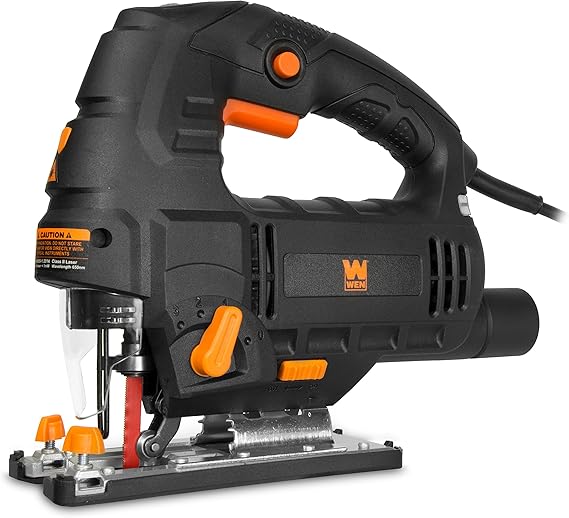
Sturdy with a metal body, the WEN 33606 6.6-Amp Orbital Jig Saw suits anyone needing a reliable tool for wood or metal cutting. Its biggest strength lies in the adjustable orbital action, which lets you switch between different blade movements for more control on various projects.
Setting it up involves plugging into a standard 120-volt outlet, then choosing from the 4-position orbital selection knob to match the cut type. The onboard laser and LED light keep your line clear in dim spots. Keeping the cut line visible is easier with the dust blower or attaching the 1-1/2-inch dust port.
The lock-on trigger helps maintain steady speed during longer cuts.
The motor delivers up to 3,300 strokes per minute with variable speed control, making smooth cuts on wood or metal. The build adds a beveling footplate for angled cuts at up to 45 degrees and a non-marring shoe to protect surfaces.
Strong points include good power and flexible blade settings. Some find the weight a bit heavy for extended work.
Strong power and adjustable blade movement get praised for accurate cuts across materials, while the main complaint revolves around the tool’s weight feeling tiring over long periods. The laser and LED assist in maintaining cutting precision, but heavier use can wear on the user.
Anyone needing a sturdy, versatile jigsaw with good lighting options will find this a solid pick. Those who require ultra-light tools or finer blade options might want to look for models better suited for delicate or extended cutting tasks.
Pros
- Variable speed up to 3,300 strokes per minute
- 4-position orbital blade movement for different cuts
- Onboard laser and LED for clear cutting line
- Includes dust port and dust blower for cleaner cuts
Cons
- Heavier than some other jigsaws for long sessions
- Standard 10-tooth blades limit very fine cutting
| Specification | Details |
|---|---|
| Power Source | Corded Electric |
| Voltage | 120 volts |
| Current Rating | 6.6 A |
| Speed | 3400 rpm |
| Cutting Angle | 45 degrees |
| Wattage | 792 watts |
11. Greenworks 24V Brushless Cordless Jig Saw

Greenworks 24V Brushless Cordless Jig Saw stands out for its powerful battery life and quiet motor, making it ideal for medium-duty woodworking and metal tasks. It suits anyone looking for a cordless jigsaw that balances power and runtime without dragging around heavy equipment.
Setting up is straightforward with the included 24V Lithium-Ion battery, which delivers 20% more power and lasts 35% longer than you’d expect. The tool-free blade clamp makes switching blades quick, while the variable speed trigger helps you adjust cutting control precisely. The built-in LED is handy in dim areas, and the bevel can be tilted easily from 0° to 45° on either side.
Cutting through wood and metal is solid thanks to the 1-inch blade stroke and 3,000 strokes per minute speed. The brushless motor runs quietly and feels durable after repeated use.
Most users appreciate its smooth power delivery, though some mention the battery could take a bit longer to charge fully. The tool-free features are practical and save a lot of time.
The tool receives strong praise for quiet operation and reliable fade-free power from the 24V lithium-ion battery. Users appreciate how easy it is to change blades and adjust the bevel without tools. A common downside found is the battery charging speed, which some feel slows down workflow during extended projects.
This jigsaw fits well for those wanting a cordless option with enough power for thicker cuts and good runtime. It will suit hobbyists and light professionals dealing with wood and metal. Users needing deeper blade cuts or faster battery recharge should explore alternatives.
Pros
- Brushless motor runs quietly and lasts longer
- Tool-free blade changes and bevel adjustments
- Includes multiple blades for wood and metal
- Built-in LED assists in low-light work areas
Cons
- Battery charging time could be improved
- Blade stroke limited to 1 inch depth
| Specification | Details |
|---|---|
| Power Source | Battery Powered |
| Voltage | 24 volts |
| Number of Teeth | 10 |
| Wattage | 120 watts |
| Cutting Angle | 45 degrees |
| Blade Shape | Rectangular |
12. BLACK+DECKER BLJS78B 20V MAX Cordless Jig Saw

Need a jigsaw that offers more power and flexibility when you’re on the go? The BLACK+DECKER BLJS78B 20V MAX Cordless Jig Saw is built for anyone needing strong, cordless cutting performance without being weighed down. Its brushless motor gives up to 36% more power, making it ideal for tackling wood, metal, and plastic with ease.
Setup is straightforward since it runs on a 20V battery, so no cords to manage. Its lightweight design helps when working in tight spots or holding it for extended periods. The built-in LED lights your cutting line, while the sturdy aluminum base keeps the tool steady for straight, precise cuts.
It’s easy to switch between straight, curved, and angled cuts thanks to the 1-inch stroke length.
Performance feels solid and reliable. The powerful brushless motor ensures cutting through materials is smooth and consistent. The aluminum base helps control and precision, even on tricky angles.
Most users praise its long runtime and comfortable handling. A common gripe is that the battery life can sometimes become limiting on bigger projects, requiring a recharge or spare battery to keep going.
The brushless motor stands out for giving noticeably more power in a cordless jigsaw, making cutting through different materials easier and more reliable. Most users find the battery runtime sufficient but mention needing to recharge or swap batteries during longer cuts.
Anyone needing a versatile and portable jigsaw for wood, metal, or plastic will appreciate this tool’s power and control. Those who regularly tackle very large, extended projects might want to consider a corded model or carrying extra batteries to avoid downtime.
Pros
- Brushless motor delivers strong power
- Lightweight and easy to handle
- Sturdy aluminum base for precise cuts
- Built-in LED helps visibility
Cons
- Battery life may limit large projects
- Cutting capacity depends on battery charge
| Specification | Details |
|---|---|
| Power Source | Battery Powered |
| Voltage | 20 volts |
| Stroke Length | 1 inch |
| Cutting Capacity | Up to 82 ft. (25m) per charge |
| Motor Type | Brushless |
Best Jigsaw Cutters Comparison Table
| Product | Power Source | Wattage | Speed (rpm) | Special Feature |
|---|---|---|---|---|
| BLACK+DECKER BDEJS300C | Corded Electric | 540 watts | 3200 rpm | Variable Speeds |
| DEWALT DCS334B 20V Jig Saw | Battery Powered | 2000 watts | – | Brushless motor, Orbital action |
| SEESII 500W Corded Jig Saw | Corded Electric | 500 watts | 3000 rpm | Bevel Capability, Keyless Blade |
| SEESII Cordless Jig Saw Kit | Battery Powered | 200 watts | – | Bevel, Keyless Blade |
| SKIL JS314901 Corded Jig Saw | Corded Electric | 600 watts | – | Depth Adjustment |
| DEKOPRO Corded Jig Saw | Corded Electric | 550 watts | 3000 rpm | Ergonomic Handle |
| Hammerhead HAJS048 Jig Saw | Corded Electric | 600 watts | – | Brake |
| 350W Corded Wood Cutter | Corded Electric | 350 watts | – | Quick-Release Chuck |
| 6.7-Amp Corded Jig Saw | Corded Electric | 800 watts | 3000 rpm | Bevel, Keyless Blade |
| WEN 33606 Orbital Jig Saw | Corded Electric | 792 watts | 3400 rpm | Brushed |
| Greenworks 24V Brushless Jig Saw | Battery Powered | 120 watts | – | Brushless |
| BLACK+DECKER BLJS78B 20V Cordless | Battery Powered | – | – | Brushed, Brushless |
- Power SourceCorded Electric
- Wattage540 watts
- Speed (rpm)3200 rpm
- Special FeatureVariable Speeds
- Power SourceBattery Powered
- Wattage2000 watts
- Speed (rpm)–
- Special FeatureBrushless motor, Orbital action
- Power SourceCorded Electric
- Wattage500 watts
- Speed (rpm)3000 rpm
- Special FeatureBevel Capability, Keyless Blade
- Power SourceBattery Powered
- Wattage200 watts
- Speed (rpm)–
- Special FeatureBevel, Keyless Blade
- Power SourceCorded Electric
- Wattage600 watts
- Speed (rpm)–
- Special FeatureDepth Adjustment
- Power SourceCorded Electric
- Wattage550 watts
- Speed (rpm)3000 rpm
- Special FeatureErgonomic Handle
- Power SourceCorded Electric
- Wattage600 watts
- Speed (rpm)–
- Special FeatureBrake
- Power SourceCorded Electric
- Wattage350 watts
- Speed (rpm)–
- Special FeatureQuick-Release Chuck
- Power SourceCorded Electric
- Wattage800 watts
- Speed (rpm)3000 rpm
- Special FeatureBevel, Keyless Blade
- Power SourceCorded Electric
- Wattage792 watts
- Speed (rpm)3400 rpm
- Special FeatureBrushed
- Power SourceBattery Powered
- Wattage120 watts
- Speed (rpm)–
- Special FeatureBrushless
- Power SourceBattery Powered
- Wattage–
- Speed (rpm)–
- Special FeatureBrushed, Brushless
How to Choose the Right Jigsaw Cutter
Choosing the right jigsaw cutter depends on blade material, tooth design, and compatibility with your tool. These factors ensure clean cuts, durability, and efficiency, helping you avoid frequent replacements and poor results that waste time and materials.
Power and Motor Performance
Cutting through tough wood or metal often requires solid power behind the tool. Wattage or amperage ratings give a direct clue about how well the motor performs under load.
Low-powered models struggle with thicker materials and stall easily, causing frustration and slower work. A motor rated around 6 to 8 amps typically handles most home projects without overheating.
Variable speed control changes everything during use, allowing smoother cuts on thin plywood or aggressive ripping through hardwood. This flexibility helps avoid burn marks and improves finish quality.
Durable motors also matter; ones with brushless designs or good cooling systems last longer and maintain consistent performance. A reliable motor helps avoid frequent replacements and keeps the tool working hard in your toolbox.
Blade Compatibility and Ease of Change
Blade fitting matters more than most expect. Universal fittings are a big time-saver because replacement blades are easy to find and usually less expensive. Proprietary systems can limit options and may require specific brands or types that cost more.
Fast blade changes without tools speed up work, especially when switching between wood, metal, or plastic blades.
A good design allows blade swaps in seconds using a simple lever or button. This avoids fumbling with tiny screws or hex wrenches. Versatility depends on the range of compatible blades.
Look for options handling fine cuts, curved patterns, and thick materials to cover all typical jobs.
Ergonomics and Handling
Long hours cutting wood or trims get tiring fast if the tool doesn’t feel right in the hand. Comfortable grips with soft, non-slip rubber reduce hand strain and allow better control, resulting in cleaner cuts. Weight plays a big part; too heavy and the arm tires quickly, especially when working overhead or in awkward positions.
Tools around 3 to 4 pounds offer a good balance of power and handleability. Vibration control technology also makes a real difference. Reducing vibration lets you keep a steady line and prevents numbness in fingers during extended projects.
Cutting Accuracy and Adjustability
Cutting accuracy depends heavily on how much the tool lets you control the blade motion. Orbital action settings allow adjusting the blade’s forward and backward movement, changing between fast rough cuts and slow, precise finishes. This adjustability is essential for working on delicate materials.
Adjustable shoe or base plates improve versatility by letting you cut bevels at common angles like 45 degrees. Features like clearly marked angle guides help set these quickly.
Stable marking guides or built-in laser pointers aid in lining up cuts precisely, which saves time on sanding or corrections after cutting.
Power Source and Portability
Choosing between a corded model for steady power or a cordless one for portability depends on your typical work style. Corded tools deliver consistent, unlimited runtime but require a power outlet or extension cord, limiting movement.
Cordless tools offer freedom to work anywhere but depend on battery life, which varies by model. High-capacity batteries with quick charging reduce downtime.
Evaluating the weight added by batteries is important too; heavier batteries affect balance and comfort. For longer projects without breaks, corded usually wins, while cordless excels for quick jobs or working outdoors.
Tips for Achieving Precise Cuts with a Jigsaw Cutter
Starting with the right blade is essential to achieve precise cuts using a jigsaw cutter. Blades with fine teeth are better for detailed work and thinner materials, while coarse blades cut faster through thicker or harder materials.
Keep the base plate firmly against the work surface to stabilize the tool and prevent wandering. Clamping the workpiece securely helps maintain accuracy and reduces vibration. Move the jigsaw slowly along the marked line; rushing often causes jagged edges or mistakes.
Using a guide or fence can assist in maintaining straight cuts, especially for long or complex shapes. Also, setting the correct speed for the material makes a difference; slower speeds reduce tear-out on delicate surfaces. Regularly check the blade’s sharpness since dull blades can cause uneven cuts and overwork the motor.
Before cutting, marking the line clearly with a pencil or masking tape can provide a visible path to follow accurately.
How to Properly Maintain and Care for Your Jigsaw Cutter
Routine cleaning plays a key role in keeping a jigsaw cutter in good condition. After each use, remove dust and debris from the blade area and vents with a brush or compressed air. Lubricating the moving parts occasionally helps prevent rust and ensures smooth operation.
Always unplug the tool before performing maintenance to avoid accidents. Checking the blade clamp for tightness before starting the next job ensures the blade stays securely in place.
When your jigsaw has adjustable settings, make sure to check them regularly to ensure they work properly and clean off any build-up around knobs or switches. Store the jigsaw in a dry place, preferably inside a case or toolbox, to protect it from moisture and impacts. Replace worn or damaged blades as soon as possible since operating with old blades can strain the motor.
Following the manufacturer’s recommended maintenance schedule will extend the tool’s lifespan.
Common Mistakes to Avoid When Using a Jigsaw Cutter
One common mistake is applying too much pressure during cutting, which can force the blade off the line or cause it to break. Letting the jigsaw do the work by guiding it gently provides a smoother finish. Another frequent error involves using the wrong blade for the material, leading to poor cuts or blade damage.
Overlooking safety gear such as goggles or ear protection puts the user at risk of injury. Starting the cut before the blade reaches full speed tends to create rough edges, so wait for the blade to spin at the proper speed first.
Cutting unsupported workpieces may cause unwanted movement or splintering. Forgetting to secure the material with clamps can make the project harder to manage and reduce accuracy. Not checking for a dull blade is a problem since it wastes effort and lowers cut quality.
Avoiding these mistakes helps improve results and safety during jigsaw use.
People Also Asked
How Do I Choose the Right Size Jigsaw Blade?
Choose a jigsaw blade based on the material you’re cutting and the thickness of the material. Coarser blades with fewer teeth are better for quick, rough cuts in wood, while finer blades with more teeth suit detailed or clean cuts in metal or plywood. Always match the blade type to your project’s needs for better results.
What Safety Precautions Should I Take When Using a Jigsaw?
Always wear eye protection and keep your hands away from the cutting path when using a jigsaw. Secure the material firmly to prevent slipping, and unplug the tool when changing blades. Using a dust mask can help during prolonged cutting, especially on materials that create a lot of dust.
How Do I Maintain and Care for My Jigsaw Cutter?
Keep the jigsaw clean by wiping off dust and debris after use and occasionally oiling moving parts as recommended by the manufacturer. Check for blade sharpness and replace blades as needed to avoid strain on the motor. Store it in a dry place to prevent rust and damage.
What Common Problems Occur with Jigsaw Cutters and Their Fixes?
Common problems include blades getting stuck or bending and the motor overheating. To fix stuck blades, reduce cutting speed or make sure the material is properly clamped. Prevent overheating by giving the jigsaw breaks during extended use and keeping vents clear of dust.
How Long Does a Typical Jigsaw Blade Last with Regular Use?
A jigsaw blade typically lasts for several cuts but depends on the material and blade quality. Frequent cutting in hard or metal materials wears blades faster. Watch for slower cutting speed or rough edges as signs you need a new blade.
Conclusion
Choosing a jigsaw cutter mainly comes down to how comfortable it feels in your hand, the range of speeds it offers, and its ability to handle different materials. Look for one with a stable base to keep your cuts straight and a blade that’s easy to change.
Noise and vibration levels also affect how long you can work without getting tired.
Think about where you’ll store it and how often you’ll use it before making a decision. A smaller, simpler model might be enough for occasional jobs, while a more powerful one suits frequent use.
Check the comparison table and review the detailed picks above to find the best fit for your needs and budget.

I’m Ryan Mitchell, an automotive writer with a solid background in vehicle diagnostics and repair. I cover brake problems, transmission issues, dashboard warning lights, battery troubles, and routine servicing. I explain technical problems in plain language so drivers understand what’s going wrong, talk confidently with their mechanic, and make smarter repair decisions.


