Top 12 Best Entry Level Drill Press You Can’t Miss!
Trying to drill precise holes with a cheaply made or overly complex machine often leads to frustration. The wrong drill press can wobble, lack power, or provide inconsistent speeds, making simple tasks take far longer than necessary. A best entry level drill press offers a solid balance of reliability and ease, suited for hobbyists or occasional woodworking without overwhelming features or cost.
Key factors distinguishing a good drill press at this level include a sturdy cast iron base and table, which provide stability during operation. Variable speeds, typically ranging from 500 to 3000 RPM, allow for drilling different materials effectively. A clear and easy-to-use depth stop ensures consistent hole depth, while safety features like a transparent guard help protect the user without obstructing visibility.
Need a Quick Check?
| Image | Product | Price |
|---|---|---|
Our Top Picks 1 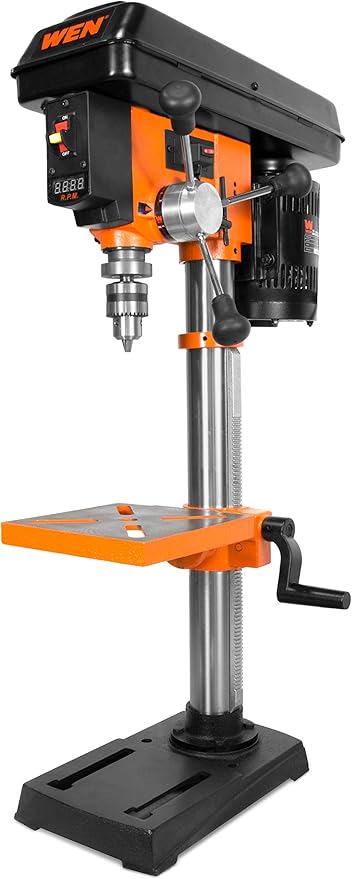 | WEN DP1062V Drill Press | Check Price |
Our Top Picks 2  | SKIL DP9505 Drill Press | Check Price |
Our Top Picks 3  | VEVOR 12-Inch Drill Press | Check Price |
Our Selected Top 12 Entry Level Drill Press Worth Buying
This list features carefully chosen entry level drill presses suitable for beginners and hobbyists. Each review covers how the tool performs, who it best suits, and highlights its strengths and weaknesses to help readers make an informed buying decision.
1. WEN DP1062V 10-Inch Benchtop Drill Press
Projects requiring precise drilling can be tricky without the right tool, especially for beginners. The WEN DP1062V 10-Inch Benchtop Drill Press suits hobbyists or light workshop use well, standing out most for its versatile speed range and accuracy thanks to its digital speed readout.
Setting up the machine is straightforward, with a compact size that fits on most workbenches. Adjusting the speed is simple through the mechanical variable control, covering 530 to 3100 RPM, visible at a glance via the digital display.
The included laser guide helps align the drill spot, while the adjustable depth stop adds consistency for repeated tasks.
It drills through wood and metal up to half an inch cleanly, powered by a 6.2-amp motor that balances power with manageable noise. The build feels sturdy for a benchtop model, although some might find it a bit heavy at 57 pounds to move around.
Praise centers on its precise, reliable speed control, and the most common complaint regards the weight and occasional difficulty adjusting the work table.
Precision shines thanks to the digital speed readout and variable RPM control, making accurate drilling easier. Users note the weight presents a challenge when relocating the drill press, and some find the beveling work table requires care to adjust properly.
Ideal for hobbyists and light workshop users needing variable speeds and clear feedback on RPM. Users seeking portability or frequent repositioning may prefer a lighter or smaller drill press model.
Pros
- Digital speed readout for precision
- Adjustable mechanical variable speed
- Laser guide improves drilling accuracy
- 2-year warranty included
Cons
- Relatively heavy at 57 pounds
- Work table adjustment can be tricky
| Specification | Details |
|---|---|
| Power Source | Corded Electric |
| Maximum Rotational Speed | 3100 rpm |
| Amperage | 6.2 A |
| Maximum Chuck Size | 0.5 inches |
| Voltage | 120 volts |
2. SKIL DP9505-00 10-Inch Benchtop Drill Press
With a powerful 6.2 amp induction motor, the SKIL DP9505-00 10-Inch Benchtop Drill Press suits anyone starting out in woodworking or metalworking. It stands out by offering five adjustable speeds catering to a variety of materials, making it a versatile choice for typical entry-level projects.
Setup is straightforward thanks to its adjustable table height and tilting work surface, which lets you handle angled drills from 0 to 45 degrees on both sides. The laser alignment system helps line up each drill spot accurately, and the LED worklight keeps your workspace bright.
The bump-off switch adds a layer of safety during operation.
This drill press handles wood and metal drilling with solid power and precision. Its build feels sturdy for the price, and the adjustable depth stop makes consistent hole depth easy to achieve.
The laser alignment is praised for accuracy, but some find the chuck size limited to 0.5 inches restricts larger bit use.
The strongest point of this drill press is its precise laser alignment system that improves drilling accuracy, making it easier to get clean, straight holes. The most frequent complaint is about the limited 0.5-inch maximum chuck size, which can restrict working with larger drill bits for bigger projects.
People new to drill presses or those working mostly on small to medium-sized wood and metal projects will appreciate this tool’s power and features. Users needing to drill larger holes or use bigger bits might want to look for models with a bigger chuck capacity.
Pros
- Strong 6.2 amp motor powers through various materials
- Five speeds cover different drilling needs
- Laser alignment offers precision drilling
- Tilting table allows angled drilling up to 45 degrees
Cons
- Chuck size limits drill bit diameter to 0.5 inches
- Some users find depth adjustment less intuitive
| Specification | Details |
|---|---|
| Power Source | Corded Electric |
| Motor Amperage | 6.2 A |
| Speed Settings | 5 speeds from 610 to 2800 RPM |
| Maximum Chuck Size | 0.5 inches |
| Drilling Capacity Wood/Metal | 0.5 inches |
| Tilting Table | 0-45 degrees left and right |
3. VEVOR 12-Inch Benchtop Drill Press
People working on woodworking or light metal projects at home will find this benchtop drill press very fitting. It suits hobbyists and DIYers needing reliable power and good control.
A standout feature is the adjustable speed with a digital readout, making precision drilling on different materials easier to manage.
Setting it up is straightforward, with a stable worktable that you can adjust for different job needs. The X-laser guide helps align the drill bit exactly where you want to go, cutting down on mistakes.
Speed adjustments from 530 to 3140 RPM happen quickly, letting you move from wood to metal without hassle.
Its 1.0 HP motor delivers enough torque to handle small to medium tasks smoothly. The machine runs steady thanks to a solid build and a high-precision spindle. People appreciate how accurately it drills, but occasional concerns arise about the maximum 0.6-inch chuck size limiting larger bits.
The crisp performance and precise drilling are frequently praised, while the restricted chuck size around 0.6 inches is the most common limitation mentioned. It performs well for light woodworking and metalwork, though those looking for more heavy-duty capability may find it lacking.
Anyone working on small to medium home projects will find this drill press suits their needs. Those requiring larger bit capacity or industrial strength will be better off considering other models designed for tougher conditions and bigger capacity.
Pros
- Variable speed with clear digital readout
- Accurate drilling thanks to X-laser positioning
- Stable and adjustable worktable for versatility
- 1.0 HP motor reliable for light projects
Cons
- Chuck size limits larger drill bits to 0.6 inches
- Not ideal for heavy industrial use or very thick metal
| Specification | Details |
|---|---|
| Power Source | Corded Electric |
| Maximum Rotational Speed | 3140 rpm |
| Voltage | 110 volts |
| Maximum Chuck Size | 0.6 inches |
| Maximum Torque | 100 in-lb |
4. No Brand 8-Inch Benchtop Drill Press

Ideal for beginners taking on small projects, this 8-inch benchtop drill press stands out with its built-in LED work light and X-ray positioning system. It’s designed to give you better visibility and accuracy, which many entry-level drills lack.
Setup is straightforward since it’s a corded electric model running on 12 volts with a 2.5 amp motor. Adjusting the speed is easy thanks to the five variable speed settings ranging from 620 to 3100 RPM, letting you tailor the drill speed for wood or metal tasks. The laser level adds a helpful guide for marking drilling spots precisely, while the bright LED light keeps your work area well-lit.
The drill performs steadily within its capacity, handling up to half an inch in wood and metal. Construction feels solid for its price range, making it reliable for light-duty drilling.
Users often mention the precise speed adjustments and helpful lighting as highlights, although some note the drill chuck size limits larger bits, which can be restrictive for heavy projects.
Many users appreciate the combination of adjustable speeds and guided lighting for precision work. The main drawback mentioned is the small chuck size, which limits the size of bits and restricts heavier drill work.
People working on basic woodworking or metal projects with light drilling needs will find this drill press suitable. Those requiring more power or larger bit capacity should consider other options.
Pros
- Integrated LED work light for clear visibility
- X-ray positioning system ensures accurate drilling
- Five variable speeds, up to 3100 RPM
- Compact size fits small workspaces
Cons
- Chuck size limits drill bit diameter to 0.5 inches
- Low voltage may restrict heavy-duty tasks
| Specification | Details |
|---|---|
| Maximum Rotational Speed | 3100 rpm |
| Power Source | Corded Electric |
| Voltage | 12 |
| Amperage | 2.5 A |
| Maximum Chuck Size | 0.5 inches |
| Number of Speeds | 5 |
5. Milescraft DrillMate Portable Drill Guide
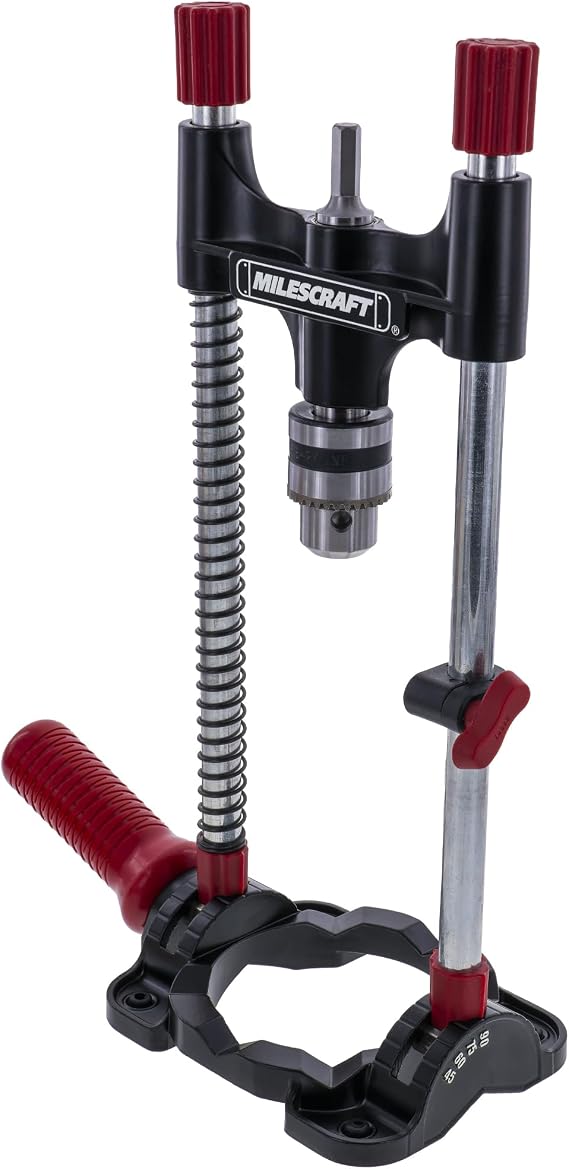
Milescraft DrillMate Portable Drill Guide delivers precise drilling on the go, perfect for hobbyists and DIYers needing accuracy without bulky equipment. Its biggest strength lies in versatility, supporting various angles and materials with a lightweight, compact setup that turns handheld drills into near drill presses.
Setting up involves attaching the guide to a 3/8 or 1/2 cordless drill, then selecting from angle settings at 45, 60, 75, or 90 degrees, each locks firmly for consistent results. The self-centering base makes drilling into round stock up to 3 straightforward.
Portability means it’s easy to carry around, and the included 3/8 chuck fits comfortably on most compatible drills.
Performance holds up well for precise straight or angled drilling tasks, with the locked angle feature ensuring accuracy. Construction is practical and lightweight, ideal for portability though some find it less stable on heavier-duty projects. A consistent praise is its ability to replicate drill press precision without stationary bulk, while complaints mostly focus on stability during tougher jobs.
DrillMate gets praised for how well it mimics a stationary drill press in a portable form, maintaining locked angles for precise drilling. Most complaints come from users wanting a sturdier feel during tougher materials or tasks that push beyond its designed limits.
Ideal for DIY projects, light woodworking, and hobby use where portability is key. Those needing heavy-duty drilling or larger bits should look for options better designed for sturdy stationary work.
Pros
- Multiple angle settings lock in place for accuracy
- Self-centering base for round stock up to 3 inches
- Compact and lightweight for easy portability
- Compatible with common cordless drills
Cons
- Less stable on heavy-duty or dense materials
- Maximum chuck size limits larger drill bits
| Specification | Details |
|---|---|
| Maximum Rotational Speed | 5000 rpm |
| Maximum Chuck Size | 0.38 inches |
| Compatible Devices | Milescraft drills, 3/8″ cordless drills, 1/2″ cordless drills |
| Drilling Angle Settings | 45, 60, 75, 90 degrees |
| Power Source | Hand Powered |
6. JET JWDP-10 10-Inch Drill Press

Feeling solid and manageable on a workbench, it fits well for those starting with light to medium drilling tasks. Its biggest strength lies in balancing compact size with useful power and speed options, making it a great entry-level drill press for casual woodworkers and hobbyists.
Setup involves placing it on any sturdy surface since it’s lightweight at 48 lbs and runs on standard 120V household power. Changing speeds is easy thanks to five presets ranging from 630 to 3300 RPM.
The table’s ability to tilt ±45° lets you handle angled drilling without awkward setups. The built-in laser guide saves time lining up your drill points accurately every session.
Drilling through wood and softer metals works well with its 0.33 hp motor. The 1.5-inch chuck size handles various bits, though it’s limited to 0.5-inch metal drilling capacity, so heavier metal projects might demand more power.
The compact benchtop construction feels sturdy though the lightweight frame can rock on uneven surfaces. Many praise the speed range and tilting table, while some note the noise level during extended use as a drawback.
The drill press offers a wide speed range and handy tilting table that users appreciate most during varied tasks. The noise level and lighter frame causing some vibration are the most mentioned downsides. It handles routine drilling with surprising precision thanks to its laser guide and stable table design.
Those focused on woodworking and light metal projects will find this tool meets basic needs perfectly. Anyone requiring heavy-duty metal drilling or super-quiet operation should look at bigger or more industrial models instead.
Pros
- Compact size fits small workspaces
- Table tilts ±45° for angled drilling
- Five speed settings across 630 to 3300 RPM
- Laser guide aids precise drilling alignment
Cons
- Limited to 0.5-inch drilling in metal
- Can be noisy during longer use
| Specification | Details |
|---|---|
| Maximum Rotational Speed | 3300 rpm |
| Voltage | 120 volts |
| Power Source | Corded Electric |
| Maximum Chuck Size | 1.5 inches |
| Drilling Capacity Metal | 0.5 inches |
7. Kreg Drill Guide Pro

Ideal for anyone starting out with cordless drills, this product turns your handheld tool into a steady drill press. Its strongest feature is the ability to set precise drill angles from -45 to 45 degrees, adding real versatility to basic drilling tasks.
Setup takes just a few minutes since it fits most 3/8” and ½” cordless drills. The included 3/8” chuck keeps your drill secure. When drilling, the built-in depth stop and dust collection help maintain a clean workspace and consistent hole depth.
The non-slip feet hold your work steady, while the handle makes adjustments straightforward and comfortable.
Performance delivers reliable, accurate drilling at various angles without the usual hassle of positive stops restricting adjustments. The tool is lightweight at 3.1 pounds and compact, making it easy to transport and store.
Most praise the precise angle settings and dust control, though some find the size limiting for larger projects.
The product earns praise for precise angle adjustments and keeping the workspace tidy with its dust collection feature. Common complaints mention the small size limiting what can be drilled, especially for bigger projects.
Those looking for a compact, portable drill press for smaller DIY jobs will appreciate this tool. Users requiring heavy-duty drilling or larger capacity might consider other options better suited to bigger tasks.
Pros
- Adjustable angle settings from -45 to 45 degrees
- Built-in dust collection for cleaner drilling
- Integrated depth stop for consistent hole depth
- Non-slip feet keep the workpiece steady
Cons
- Limited size for larger workpieces
- Chuck capacity only 3/8” with key
| Specification | Details |
|---|---|
| Manufacturer | Kreg |
| Part Number | KDG6500 |
| Item Weight | 3.1 pounds |
| Product Dimensions | 2.5 x 6 x 12 inches |
| Compatibility | 3/8” and ½” cordless drills |
8. VEVOR 10-Inch Benchtop Drill Press

Metal construction and a 10-inch swing define this drill press, making it suitable for hobbyists and DIYers looking for power and precision at an entry-level price. Its biggest strength lies in balancing sturdy build quality with adjustable speeds for various materials.
Setting up is straightforward with the corded electric design. The 3.2A induction motor powers through wood and metal alike. Users can choose from five speeds between 650 and 3100 RPM, which covers most drilling needs.
The bench-friendly size fits well in a small workshop and stays cool thanks to an efficient heat dissipation system, allowing longer work sessions without overheating concerns.
Drilling accuracy is strong, producing holes without any noticeable offset. The locking mechanism holds firm, preventing wobble during use.
Construction feels solid, built to last with metal components and thoughtful design. Positive feedback often praises its precise drilling capability. More than one note mentions the top speed maxing out close to 2800 RPM, which might be limiting for specific heavy-duty tasks.
The drill press consistently provides accurate, stable holes without offset due to its strong locking and solid construction. Some find the top speed a bit low for tougher metal drilling or larger bit sizes. Heat dissipation lets the motor run longer without performance loss.
People needing a steady, precise drill for wood and small metal projects will appreciate the adjustable speeds and rugged frame. Those wanting very high-speed drilling or larger chuck capacity should look at other models.
Pros
- Solid metal build for durability
- Five adjustable speeds for material versatility
- Effective heat dissipation system
- Precise, no-offset drilling
Cons
- Top speed limited to 2800 rpm
- Chuck size maxes out at 0.5 inches
| Specification | Details |
|---|---|
| Power Source | Corded Electric |
| Maximum Rotational Speed | 2800 rpm |
| Voltage | 120 volts |
| Amperage | 3.2 A |
| Number of Speeds | 5 |
| Maximum Chuck Size | 0.5 inches |
9. No Brand 10-Inch Benchtop Drill Press

Intelligent stepless speed adjustment stands out from the start, making it suitable for beginners needing control over various materials. It fits well on a benchtop and handles wood and metal drilling with a wide speed range from 50 to 3000 RPM, adapting smoothly to different tasks.
Setup is straightforward with a corded electric design requiring just a stable workspace. Changing speeds is simple thanks to the inverter, which lets you easily adjust between low and high ranges.
The 10-inch swing capacity and 2-3/8 inches spindle travel offer enough reach for standard projects without overcomplicating use.
Powered by a 6.2-amp motor, performance covers a span from softwoods to tougher metals without bogging down. The build offers durability and precision for an entry-level model, with a 5/8-inch chuck that suits most drill bits.
Most praise highlights effective speed control, whereas the most common complaint points to the base stability needing work during heavier drilling.
Effective speed control is the strongest feature, allowing precise adjustment for different materials. A common issue comes with base stability; it can wobble during more demanding drilling operations, requiring careful setup to avoid movement.
The drill press suits hobbyists and beginners working on small to medium projects with variable material types. Users needing heavy-duty or industrial-level stability may want to consider larger, more durable models designed for intensive use.
Pros
- Wide speed range from 50 to 3000 RPM
- Powerful 6.2-amp motor for consistent performance
- 10-inch swing capacity handles various drill sizes
- Simple stepless speed control via inverter
Cons
- Base stability can wobble under heavier loads
- Limited spindle travel of 2-3/8 inches
| Specification | Details |
|---|---|
| Power Source | Corded Electric |
| Maximum Rotational Speed | 3000 rpm |
| Amperage | 6.2 A |
| Maximum Chuck Size | 0.63 inches |
| Drilling Capacity Wood | 2.38 inches |
| Drilling Capacity Metal | 2.38 inches |
10. No Brand 710W Mini Benchtop Drill Press

Need a drill press that delivers serious power but won’t take up too much space? Perfect for home DIY, this 710W mini benchtop drill press offers solid torque and versatile speed options, making it ideal for tackling wood, metal, and plastic projects with confidence and accuracy.
Setting it up on a benchtop is straightforward thanks to its compact design. The five-speed controls allow quick adjustments between 800-3000 RPM shown clearly on the digital display, so you can tailor drilling speed precisely.
The depth stop helps avoid over-drilling, and the clamping range up to 13mm accommodates a wide variety of drill bits. Cooling vents keep the motor running steadily longer.
Performance matches its specs well. The 710W pure copper motor provides reliable power delivering up to 15 ft-lb torque for drilling through various materials including 2-inch wood. The digital RPM readout is a helpful touch for consistent operation, yet some users note occasional limits with very dense or large-scale workpieces.
Construction feels solid but leans toward a small, lightweight frame designed for bench mounting rather than heavy industrial use.
The digital RPM display offers genuinely useful precision during drilling, appreciated by users working on detailed projects. Common issues point to challenges handling very heavy-duty drilling beyond typical DIY tasks. The cooling vents help extend run time by preventing quick overheating.
This drill press suits hobbyists and DIYers needing consistent drilling power and speed control in a compact form. Those who require professional-grade durability or large material capacity should consider more industrial models.
Pros
- Real-time digital RPM display
- Compact, benchtop-friendly size
- Powerful 710W pure copper motor
- Variable speed from 800 to 3000 RPM
Cons
- Limited for very large or dense materials
- Lightweight build may feel less stable
| Specification | Details |
|---|---|
| Power Source | Corded Electric |
| Maximum Rotational Speed | 3000 rpm |
| Maximum Chuck Size | 13 millimeters |
| Maximum Torque | 15 ft-lb |
| Power | 710 watts |
| Number of Speeds | 5 |
11. VEVOR 10-Inch Benchtop Drill Press

Drilling precise holes for woodworking or light metal projects becomes much easier with a compact benchtop drill press that fits small workshops or home garages. Perfect for hobbyists or beginners, this model impresses most with its focused power that handles common materials without fuss.
Setting it up takes little time with clear instructions, and the adjustable worktable lets you position materials at just the right height. The variable speed control with a digital readout helps switch speeds quickly to match different tasks. The X-laser positioning system reliably marks where the drill bit will enter, reducing errors and saving material waste during regular use.
Performance is consistent across wood and metal drilling, with the 0.8 HP motor providing enough torque for holes up to 0.5 inches in diameter. The build feels sturdy on the benchtop, keeping vibrations minimal for accurate work. Praise centers on its accuracy thanks to the laser guide, while complaints mostly mention the maximum chuck size limiting larger drill bit use.
The strongest point is the precise drilling thanks to the X-laser positioning, which really cuts down on guesswork and material waste. The most frequent drawback is the 0.5 inch chuck size, which restricts drilling larger holes and may not suit all project needs.
People working mostly with small to medium holes in wood or thin metal sheets will find this drill press very useful. Those needing larger drill bits or heavy-duty metal cutting should consider more powerful, larger chuck drills instead.
Pros
- Variable speed with digital readout
- Built-in X-laser for precise drilling
- Stable and adjustable worktable
- Decent power for wood and metal
Cons
- Chuck size limits drill bit capacity
- Only good for holes up to 0.5 inches
| Specification | Details |
|---|---|
| Power Source | Corded Electric |
| Maximum Rotational Speed | 3140 rpm |
| Voltage | 110 volts |
| Maximum Chuck Size | 0.5 inches |
| Maximum Torque | 53.5 Nm |
12. Garvee 10-Inch Benchtop Drill Press

Offering a variable speed range from 530 to 3140 RPM, this drill press is a solid pick for beginners needing precise control during drilling. Ideal for hobbyists or light workshop use, its stepless speed adjustment is the feature that really stands out for handling different materials without hassle.
Setting up is straightforward with an AC power source and a 5-amp motor powering the unit. The integrated LED light brightens the workspace, which helps when drilling in less-than-ideal lighting.
Adjusting speed is simple thanks to the high-performance inverter, making it easy to switch between softwoods and metals while maintaining precision.
The drill press gets the job done with a solid 10-inch swing capacity and a spindle travel of 2-3/8 inches. The build feels stable and reliable under extended use, but some users mention the 1/2 inch chuck size limits larger bit options.
It delivers consistent power though the machine is better suited for smaller projects.
The drill press is praised for its steady and reliable power output during prolonged use, helping with precision drilling across various materials. One common drawback noted is the limitation in chuck size, which restricts the range of drill bits, especially larger ones.
People needing a dependable, entry-level drill press for small to medium projects will find this a good fit. Those requiring heavy-duty drilling or larger bit capacity should consider models designed for industrial or professional use.
Pros
- Stepless speed adjustment from 530 to 3140 RPM
- Integrated LED work light for better visibility
- Stable output with 5-amp motor for longer jobs
- Compact 10-inch swing fits smaller workspaces
Cons
- Chuck size limited to 0.5 inches
- May not suit heavy-duty or large-diameter drilling
| Specification | Details |
|---|---|
| Maximum Rotational Speed | 3140 rpm |
| Power Source | AC |
| Voltage | 120 |
| Amperage | 5 |
| Maximum Chuck Size | 0.5 inches |
| Drilling Capacity Wood | 1 inches |
Best Entry Level Drill Presses Comparison Table
| Product | Power Source | Max RPM | Max Chuck Size | Additional Feature |
|---|---|---|---|---|
| WEN DP1062V Drill Press | Corded Electric | 3100 rpm | 0.5 inches | Laser Guide |
| SKIL DP9505 Drill Press | Corded Electric | 2800 rpm | 0.5 inches | Variable Speed |
| VEVOR 12-Inch Drill Press | Corded Electric | 3140 rpm | 0.6 inches | High-Precision Spindle |
| Generic 8-Inch Drill Press | Corded Electric | 3100 rpm | 0.5 inches | Variable Speed |
| Milescraft DrillMate Guide | Hand Powered | 5000 rpm | 0.38 inches | Variable Speed |
| JET JWDP-10 Drill Press | Corded Electric | 3300 rpm | 1.5 inches | Laser Guide |
| Kreg Drill Guide Pro | – | – | – | – |
| VEVOR 10-Inch Drill Press A | Corded Electric | 2800 rpm | 0.5 inches | Durable, Precise Drilling |
| Generic 10-Inch Drill Press | Corded Electric | 3000 rpm | 0.63 inches | Variable Speed |
| Generic 710W Mini Drill Press | Corded Electric | 3000 rpm | 0.51 inches | Digital Display |
| VEVOR 10-Inch Drill Press B | Corded Electric | 3140 rpm | 0.5 inches | X-Laser Positioning |
| Garvee 10-Inch Drill Press | AC | 3140 rpm | 0.5 inches | Variable Speed |
- Power SourceCorded Electric
- Max RPM3100 rpm
- Max Chuck Size0.5 inches
- Additional FeatureLaser Guide
- Power SourceCorded Electric
- Max RPM2800 rpm
- Max Chuck Size0.5 inches
- Additional FeatureVariable Speed
- Power SourceCorded Electric
- Max RPM3140 rpm
- Max Chuck Size0.6 inches
- Additional FeatureHigh-Precision Spindle
- Power SourceCorded Electric
- Max RPM3100 rpm
- Max Chuck Size0.5 inches
- Additional FeatureVariable Speed
- Power SourceHand Powered
- Max RPM5000 rpm
- Max Chuck Size0.38 inches
- Additional FeatureVariable Speed
- Power SourceCorded Electric
- Max RPM3300 rpm
- Max Chuck Size1.5 inches
- Additional FeatureLaser Guide
- Power Source–
- Max RPM–
- Max Chuck Size–
- Additional Feature–
- Power SourceCorded Electric
- Max RPM2800 rpm
- Max Chuck Size0.5 inches
- Additional FeatureDurable, Precise Drilling
- Power SourceCorded Electric
- Max RPM3000 rpm
- Max Chuck Size0.63 inches
- Additional FeatureVariable Speed
- Power SourceCorded Electric
- Max RPM3000 rpm
- Max Chuck Size0.51 inches
- Additional FeatureDigital Display
- Power SourceCorded Electric
- Max RPM3140 rpm
- Max Chuck Size0.5 inches
- Additional FeatureX-Laser Positioning
- Power SourceAC
- Max RPM3140 rpm
- Max Chuck Size0.5 inches
- Additional FeatureVariable Speed
How to Choose the Right Entry Level Drill Press
Choosing the right entry level drill press depends on factors like motor power, speed settings, and build quality, which affect performance and durability. Selecting a model that matches your needs helps avoid frustration, costly repairs, and wasted time, ensuring smoother and safer projects.
Power and Performance
Working on hardwood or metal with a drill press that lacks sufficient motor power quickly becomes frustrating. A motor rated around 3/4 to 1 horsepower usually handles most home or shop tasks without bogging down. A model with less power tends to stall when biting into denser materials, causing poor hole quality and wasted time.
Smooth variable speed control is essential because drilling through wood requires higher RPMs, while metal or plastic benefit from slower speeds to avoid overheating.
Consistent torque is another detail often overlooked. A motor that fluctuates under load can ruin delicate work or lead to broken bits.
Look for units that maintain steady torque across their speed range. Variable speed ranges typically run from about 400 to 3,000 RPM, which covers drilling various common materials comfortably. These features combined make almost any project less stressful and produce cleaner, more precise holes.
Size and Workspace Fit
Setting up a drill press in a cramped workspace gets complicated fast if the machine is too large or awkwardly shaped. Models with a compact footprint of around 15 by 20 inches fit most small benches, but height clearance is just as critical to accommodate long drill bits and tall workpieces. Adjustable tables also save space by allowing the workpiece to be tilted or shifted without moving the entire press.
The table size, usually between 8 to 12 inches square, should be large enough to support your typical materials without interference. Be sure the throat distance, the space from the spindle to the column, is adequate, typically 6 to 10 inches, to handle wider stock. The maximum drilling depth is important too; 2 to 3 inches is common, allowing for most bench-level tasks without needing additional setups.
Build Quality and Materials
A drill press built with heavy cast iron or steel holds up better on the job and reduces vibration that ruins precision. Cheaper materials or thin plastics in key parts mean the machine can feel flimsy and drift off center.
Solid construction ensures the spindle and chuck components remain aligned over time, which is critical when drilling accurately sized holes repeatedly.
Precision in these moving parts cannot be skipped. Look for presses with well-machined spindles and smooth chucks that grip bits securely without wobbling.
Corrosion resistance is often ignored but matters because occasional spills and dust buildup can degrade working surfaces. A powder-coated or enamel finish helps with maintenance, preventing rust and making cleanup easier.
Ease of Use and Adjustability
Operating a drill press is much easier when the controls are straightforward and marked clearly. Speed adjustment knobs or pulleys should be easy to reach and understand without needing a manual every time. Smooth, secure mechanisms for raising or tilting the table prevent accidental shifts mid-project, which can spoil holes or threaten safety.
Ergonomic features also stand out in daily use. Comfortable handles and well-placed levers reduce fatigue during repetitive tasks and make precise movements feel natural.
Some models include quick-release clamps and adjustable depth stops to speed up workflow. Without these conveniences, small jobs take longer and become more frustrating.
Safety Features
Accidental starts or lack of protection around rapidly spinning parts account for many workshop injuries. Presses equipped with a solid power switch featuring a lockout prevent unintended activation, especially important in busy or noisy environments.
Guards that shield the chuck and spindle keep fingers clear and catch flying debris during drilling.
Emergency stop buttons add an extra layer of security when working quickly or with large pieces. Clear safety labels serve as constant reminders for proper operation. Machines without these features require more caution and can increase stress, especially in shared or beginner workspaces.
Proper Maintenance and Care Tips for Your Entry Level Drill Press
Regular maintenance keeps an entry level drill press running smoothly and extends its lifespan. Start by cleaning the machine after each use to remove dust and metal shavings that can interfere with moving parts.
Lubricate the chuck and spindle according to the manufacturer’s instructions; this prevents rust and reduces friction during operation. Check the belts regularly for signs of wear or cracking, as worn belts can slip and reduce power. Tighten any loose bolts or screws to keep the press stable and accurate.
Also, periodically verify the alignment of the drill bit with the table to ensure precise drilling. Store the drill press in a dry, dust-free environment to protect sensitive components. Simple upkeep routines like these can prevent costly repairs and maintain consistent performance over time.
Common Mistakes to Avoid When Using a Drill Press for the First Time
Starting out with a drill press requires attention to proper technique to avoid common pitfalls. Avoid forcing the drill through the material too quickly, which can cause the bit to overheat or break. Always secure the workpiece firmly to the table using clamps; letting it move during drilling risks inaccurate holes or injury.
Check that the drill bit is properly installed and tightened before turning on the machine to prevent wobbling or disengagement. Don’t neglect speed settings, different materials need different speeds for safe and effective drilling.
Avoid removing safety guards or bypassing protective features, as these are crucial for safe operation. Taking time to set up correctly and respecting the tool’s limitations ensures better results and longer tool life.
Comparing Drill Presses to Hand Drills: When to Choose Each Tool
Drill presses and hand drills serve distinct purposes based on the job’s requirements. A drill press offers consistent speed and perpendicular drilling, which is beneficial for tasks needing precision and repeatability, like woodworking or metalworking projects involving multiple identical holes.
Its fixed position and adjustable table height allow for controlled depth and angle settings. Conversely, hand drills excel in portability and flexibility. They work well for quick jobs or when access to tight or awkward spaces is necessary.
Hand drills allow for more freedom of movement but may sacrifice precision and consistency. Choosing between the two depends on the project’s size, precision needs, and workspace constraints.
People Also Asked
How Do I Choose the Right Size Entry Level Drill Press?
Choose a drill press size based on the largest drill bit and workpiece size you expect to handle. Smaller bench models work well for hobby projects, while floor models handle larger materials. Think about the throat depth to ensure it fits your typical project dimensions.
What Safety Precautions Should I Follow When Using a Drill Press?
Always wear safety glasses and avoid loose clothing when using a drill press. Secure your workpiece with clamps or a vise to prevent spinning or shifting. Keep hands away from the drill bit and turn off the machine before making adjustments or changing bits.
How Do I Maintain and Care for My Drill Press Properly?
Regularly clean dust and debris from the table and base to prevent buildup. Lubricate moving parts like the spindle and quill with light machine oil to avoid rust and ensure smooth operation. Check belts and replace them if worn to maintain consistent drilling power.
What Materials Are Compatible with an Entry Level Drill Press?
Entry level drill presses handle wood, plastic, and soft metals like aluminum or brass effectively. Harder metals can be drilled, but slower speeds and steady pressure are needed to avoid damaging the bit or motor. Avoid materials that produce excessive heat or require specialized bits.
What Are Common Problems with Entry Level Drill Presses and Fixes?
Common issues include belt slippage, which can be fixed by adjusting or replacing the belt. Drill chatter happens when the workpiece isn’t secured or the bit is dull; ensure clamps hold the material tight and sharpen or change the bit as needed. Some units may have uneven speeds, corrected by tightening pulleys or adjusting the belt placement.
Conclusion
Choosing an entry level drill press is mostly about finding the right balance between power, size, and ease of use. Make sure it has enough speed settings to handle different materials and that the build feels solid without being overly complicated. The table at the start and the detailed picks offer a clear look at what’s available at various price points and feature sets.
Think about how much space you have and how often you’ll use the drill press. A compact model works well for occasional use or small workshops, while a sturdier option is better suited for regular work.
Check back to the comparison table and picks above to match these details with what fits your needs best.

I’m Ryan Mitchell, an automotive writer with a solid background in vehicle diagnostics and repair. I cover brake problems, transmission issues, dashboard warning lights, battery troubles, and routine servicing. I explain technical problems in plain language so drivers understand what’s going wrong, talk confidently with their mechanic, and make smarter repair decisions.


