Top 12 Best Drill Powered Pump That Will Blow Your Mind!
Handling fluids with a drill powered pump often leads to frustration when the pump leaks, struggles with flow rate, or wears out too quickly. The best drill powered pump offers reliable transfer without frequent breakdowns or messy drips, making a noticeable difference during tasks like draining radiators, transferring fuel, or moving water from tough-to-reach spots.
Poorly made pumps tend to tear or fail at the shaft, causing delays and extra work.
A good drill powered pump stands out mainly by its build material, typically heavy-duty PVC or reinforced rubber tubing, which resists chemicals and physical wear. The fit to your drill chuck must be snug and secure to avoid slippage or damage. Pumps that handle flow rates around 2 to 3 gallons per minute work well for most jobs, while too slow or too fast can be inefficient.
Also important is how easy it is to clean after use to prevent clogs and contamination, especially if used with various fluids.
Need a Quick Check?
| Image | Product | Price |
|---|---|---|
Our Top Picks 1 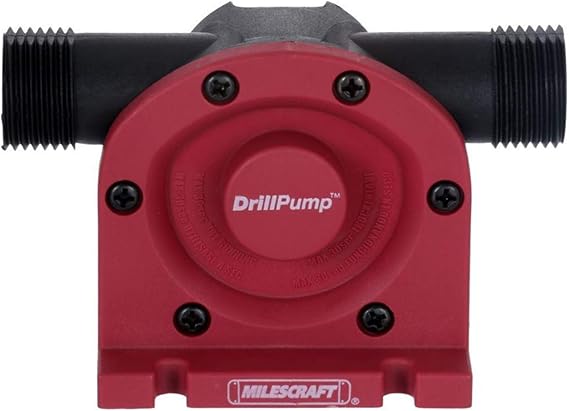 | Milescraft Drill Pump 750 | Check Price |
Our Top Picks 2  | Mini Drill Water Pump Kit | Check Price |
Our Top Picks 3  | Mini Drill Water Transfer Kit | Check Price |
Our Selected Top 12 Drill Powered Pump Picks for Every Need
This list features a variety of drill powered pumps designed for different tasks and preferences. Each review explains how the pump performs, highlights the ideal user, and outlines its main advantages and drawbacks to help you make an informed choice.
1. Milescraft Drill Pump 750
Great for someone who needs to move water quickly using a standard drill, this Milescraft Drill Pump 750 stands out for its strong flow rate. It suits garden and workshop tasks where a fast, cordless water transfer is helpful.
The most notable feature is its ability to pump up to 750 gallons per hour with easy hose connections.
Setting it up involves connecting a standard 3/4 garden hose and chucking the 3/8” shank firmly into any common drill. It won’t work without the drill powering the pump, so you need to keep your drill handy. After using, a bit of silicone grease on the rubber fan blades keeps the pump running smoothly, so maintenance is straightforward but necessary to avoid wear.
The pump does a solid job moving water at a flow rate of 12.5 gallons per minute and can lift water up to 12 feet, which covers most common needs. Its plastic housing is lightweight but needs care applying grease regularly to prevent performance drops, which is the main maintenance detail users mention. It won’t turn by hand, meaning it depends fully on drill power, and it should never be used for drinking water.
The pump delivers a high flow rate and works well for quick water transfer. Most users note the importance of applying silicone grease regularly to keep the rubber fan blades from wearing out, which is essential to maintain performance.
Anyone with a compatible drill and non-potable water pumping needs will find it useful. Those needing a pump for drinking water or hand-powered operation should look elsewhere for a better fit.
Pros
- Compatible with standard garden hoses
- Fits all common drill chucks
- Pumps up to 750 gallons per hour
- Simple to maintain with silicone grease
Cons
- Does not operate without drill power
- Not suitable for potable water
| Specification | Details |
|---|---|
| Power Source | Corded Electric |
| Flow Rate | 12.5 gpm |
| Maximum Lifting Height | 12 feet |
| Hose Connection | 3/4″ garden hose |
| Shank Size | 3/8” (fits common chucks) |
2. Mini Drill Powered Water Transfer Pump Kit
Designed for quick water or oil transfer using your electric hand drill, this Mini Drill Powered Water Transfer Pump Kit stands out by letting you move up to 750 gallons per hour without needing an external power source. It suits anyone looking for a safe, portable pumping option powered by tools they already own.
Setup involves attaching the pump to a drill with at least 1300 RPM, ideally a fully charged cordless model. The rubber impeller fits firmly and replaces with ease, helping the pump handle different liquids without corrosion. Day-to-day use is straightforward thanks to the pump’s corrosion-resistant thermoplastic body that handles weak acids and alkaline substances without wear.
The pump delivers strong performance for its size and power source, efficiently moving liquids as long as the drill’s speed matches the requirements. Its most praised feature is the durable build that resists corrosion during extended use.
The main complaint revolves around needing a drill with sufficient power, as slower drills reduce flow rate significantly.
Strong praise highlights the pump’s durability and resistance to corrosion in various liquids. The common limitation is dependence on drill speed, making it less effective with weaker or partially charged cordless drills.
Those needing a compact, drill-powered pump for quick liquid transfer will appreciate this model. People without a powerful enough drill or those needing constant flow without a drill should look for alternatives.
Pros
- Moves up to 750 gallons per hour
- Corrosion-resistant thermoplastic construction
- Rubber impeller is easy to replace
- Safe with no external power needed
Cons
- Requires drill with 1300 RPM or higher
- Slower drills reduce flow significantly
| Specification | Details |
|---|---|
| Power Source | AC/DC |
| Compatible Devices | Electric Hand Drills |
| Flow Rate | Up to 750 gallons per hour |
| Recommended Drill Speed | 1300 RPM or stronger |
| Construction Material | Corrosion-resistant thermoplastic |
3. Mini Drill Powered Water Transfer Pump Kit
TRUPOW Mini Drill Powered Water Transfer Pump Kit is designed for quick and safe water or oil transfer, perfect for anyone needing a compact pump powered by a drill. Its standout feature is moving up to 750 gallons per hour without any direct power source, making it efficient for on-site jobs.
Setting it up involves attaching the pump to a drill with around 1300 RPM or higher. A fully charged cordless drill battery ensures steady operation.
The kit includes a 10-foot hose for flexibility, and the rubber impeller inside is easy to swap out, which keeps the pump ready for regular use without much maintenance hassle.
It handles water and weak acids or alkalines well due to its corrosion-resistant thermoplastic build. The pump performs steadily, moving a good volume of liquid depending on drill speed. Praise often points to its sturdy make and effective flow rate, while some note that only drills with sufficient RPM deliver the best results.
This pump is praised for solid build quality and handling various liquids without corrosion, making it reliable for different tasks. The most common drawback is its dependency on the drill speed, meaning lower RPM drills may reduce flow rate noticeably.
Anyone with a powerful drill needing fast liquid transfer will find it useful, especially for quick jobs requiring portability. Those with low-speed drills or expecting a self-powered unit should consider other models better suited to low power sources.
Pros
- Corrosion-resistant thermoplastic construction
- Moves up to 750 gallons per hour
- Rubber impeller easy to replace
- 10-foot hose for flexible use
Cons
- Requires high RPM drill for best performance
- Dependent on drill battery charge for cordless use
| Specification | Details |
|---|---|
| Outside Diameter | 0.5 inches |
| Item Length | 10 feet |
| Flow Rate | Up to 750 gallons per hour |
| Recommended Drill Speed | 1300 RPM or higher |
4. Mini Drill Powered Water/Oil Transfer Pump

Using this drill powered pump feels surprisingly straightforward. It suits anyone with an electric drill looking to transfer water or oil quickly without buying a separate motorized pump. Its biggest strength lies in turning a simple drill into a powerful pumping tool with solid flow capacity.
Setting it up takes just a few seconds by attaching it to your drill shaft. The sturdy plastic body and rubber impeller provide a reliable seal, so you don’t have to worry about leaks while pumping.
It connects easily to standard hoses, making day-to-day water or oil transfer smooth and manageable, as long as your drill runs above 1300RPM.
Performance hits a good mark by moving up to 750 gallons per hour when paired with a higher-speed drill. The build quality is solid across the board, featuring stainless steel shafts and durable plastic parts. People praise its stability and sealing, though some mention it can wear out faster depending on use and hose handling, which is the main downside.
This pump delivers up to 750 gallons per hour with a high-speed drill, making water or oil transfer efficient. The durable plastic and stainless steel construction support stability and corrosion resistance. On the downside, wear on rubber parts can occur under intensive or careless use, which may lead to some maintenance needs.
Anyone with a compatible drill looking for a reliable and portable transfer pump will find this option very practical. Those needing heavy-duty, continuous pumping or lacking a fast drill should consider alternatives designed for industrial use or self-powered operation.
Pros
- High flow rate when used with fast drills
- Durable plastic body with corrosion resistance
- Stainless steel shaft fits all electric drills
- Good sealing prevents leaks during pumping
Cons
- Impeller and hoses may wear with heavy use
- Requires drill speed above 1300RPM for best effect
| Specification | Details |
|---|---|
| Power Source | Drill Powered |
| Flow Rate | 12.5 gpm |
| Compatible Devices | Electric Drill |
| Material | Plastic body, rubber impeller, stainless steel shaft |
5. Self-Priming Oil Pump for Electric Drill
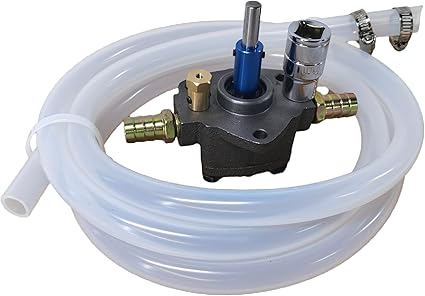
Great for anyone needing a durable drill-powered pump to move engine or transmission oil, it stands out for its strong cast iron build. It suits drivers looking for a reliable tool to handle regular oil changes with ease, delivering solid performance at a very reasonable price point.
Setting up involves attaching it to a standard electric drill and fitting the silicone hose, which is flexible and oil-resistant. Use is straightforward, as it automatically moves oil with a pumping rate of 3.5 liters per minute at 1800 rpm. Switching between the 8mm and 12mm sleeves on the output shaft easily adapts to different drills.
It pumps oil effectively with a vertical suction lift up to 3 meters, meeting most routine oil transfer needs. The cast iron body holds up well against wear, which users appreciate, but some note that the pump requires a steady drill speed to maintain consistent flow. The included silicone hose adds convenience with its durability and anti-aging properties.
Users appreciate the pump’s durable cast iron body and reliable performance, especially for handling various lubricating oils. The most common complaint is the need for a consistent drill speed to keep the oil flow steady, which can be tricky during long transfers.
Drivers doing routine oil changes will appreciate this pump for its universal fit and efficient operation. Those looking for extra safety features or fully automatic operation might want to explore other options.
Pros
- Strong cast iron construction resists wear
- Dual output shaft sleeves fit different drills
- Effective 3.5L/min flow rate at 1800 rpm
- Flexible, oil-resistant silicone hose included
Cons
- Requires steady drill speed for consistent pumping
- No indication of auto shutoff or safety features
| Specification | Details |
|---|---|
| Fit Type | Universal Fit |
| Output Flow Rate | 3.5L/min at 1800 rpm |
| Vertical Suction Lift | 3 meters |
| Output Shaft Sleeve Size | 8mm and 12mm included |
| Hose Length and Diameter | 2 meters, 12mm inner diameter silicone hose |
6. Drill Powered Water Transfer Pump

Stainless steel construction makes this drill-powered water transfer pump sturdy and long-lasting. Ideal for those who already have a drill or impact wrench and need an easy way to move liquids without buying a separate pump. Its main strength lies in delivering a reliable 8 GPM flow rate using your existing tools.
Connecting the pump to a standard drill or impact wrench takes moments, and using it day-to-day is straightforward. The anti-clog inlet filter helps keep debris from disrupting the flow, so the liquid transfer stays steady without regular clogs.
The 19.9-inch stainless steel tube and 4.9-foot reinforced hose are durable enough to handle typical draining tasks with little fuss.
Handling up to 8 gallons per minute proves efficient for moving liquids quickly. You get a solid feel from the stainless steel tube paired with a hose reinforced by steel wire, adding confidence to the build quality.
Common praise centers on its steady flow and easy drill attachment. Some users note the hose length can limit reach in larger setups, which requires a workaround.
This pump offers a reliable and steady flow of 8 GPM, powered simply by your drill, making liquid transfer fast without a dedicated motor. The anti-clog filter helps prevent blockages, but the hose length can limit reach, which might need adjustment depending on the setup.
Great for anyone who wants to repurpose a drill they already own for liquid transfer jobs. It’s perfect for smaller to medium tasks but might not suit larger-scale operations that require longer reach or higher capacity pumps.
Pros
- Uses your existing drill or impact wrench
- Anti-clog inlet keeps flow steady
- Durable stainless steel tube included
- Steel-wire reinforced hose resists kinks
Cons
- Hose length may be too short for some tasks
- Requires a compatible drill or impact wrench
| Specification | Details |
|---|---|
| Power Source | Drill-Powered |
| Flow Rate | 8 gpm |
| Compatible Devices | drill or impact wrench |
| Tube Length | 19.9 in stainless steel |
| Hose Length | 4.9 ft steel-wire reinforced |
7. Electric Drill Pump for Fluids

Quick pumping speed stands out most about this drill-powered pump, making it ideal for those who need fast fluid transfer without complex setup. It suits anyone with an electric drill looking to move water efficiently in chores like draining or refilling containers.
Setup is straightforward because it connects directly to an electric drill, saving space and avoiding bulky machinery. The pump’s plastic construction is light yet durable, and its inlet and outlet sizes fit common hoses.
Daily use involves controlling flow by adjusting the drill speed, which feels natural once you get used to it.
Pumping 15 liters of fluid per minute at recommended drill speeds makes it efficient for everyday tasks. Built from high-quality plastic, the pump lasts long and resists damage from typical wear.
High praise focuses on its quick performance and easy installation, while some find the plastic material less sturdy than metal options.
Users praise the pump’s fast transfer speed and straightforward setup using any electric drill, making water movement quick and practical. The most common drawback concerns the plastic build, which some feel could be more rugged for tougher jobs.
This pump is a solid choice for homeowners or hobbyists needing easy fluid transfer with an existing drill. Those requiring heavy-duty or metal-bodied pumps for industrial use might want to look elsewhere for more rugged durability.
Pros
- Fast pumping speed up to 30 liters per minute
- Easy installation with common electric drills
- Durable plastic construction
- Stable, efficient performance at 1500-3500 rpm
Cons
- Plastic body less durable than metal alternatives
- Performance depends heavily on drill speed control
| Specification | Details |
|---|---|
| Power Source | Corded Electric |
| Flow Rate | 15 liters per minute |
| Maximum Lifting Height | 3 meters |
| Compatible Devices | Electric Drill |
| Inlet/Outlet Inner Diameter | 0.63 in / 16 mm |
| Inlet/Outlet Outer Diameter | 0.75 in / 19 mm |
8. Portable Mini Drill Powered Water Pump

Need a pump that’s as powerful as your drill and can quietly handle water transfer? Great for anyone needing quick, efficient pumping from aquariums, sinks, or pool skimmers, it stands out for its quiet operation and ability to lift water up to 3 meters.
Its simple drill-powered design makes it a practical choice over electric pumps that can be noisy and bulky.
Setup involves attaching the pump to a standard electric drill, which means no extra power source is necessary. Make sure the water pipe is tightly sealed to the nozzle for maximum efficiency. The direction of water flow is clearly marked, helping avoid mistakes.
Day-to-day use is straightforward since it’s self-priming and easy to install on most drills, turning them into a handy pumping tool wherever you go.
Performance holds up well for various small pumping needs, keeping water moving reliably up to 3 meters high. It feels solid and durable enough for repeated use without worrying about wear. The quiet motor design makes it less disruptive compared to other pumps.
Some users point out it depends highly on the drill you use and say sealing the joint perfectly can be tricky.
The quiet motor design is praised for making it suitable for indoor use without disturbance. A common issue is ensuring the nozzle joint is tight, which is crucial to prevent leaks and maintain strong water flow. Most appreciate how the pump turns any ordinary drill into a useful water pump quickly.
Ideal for users needing occasional water transfer without investing in a dedicated pump. Those without a compatible drill or who want higher lifting power might want to look at other options designed specifically for stronger or larger scale pumping tasks.
Pros
- Quiet motor reduces noise during operation
- Works with most corded or cordless drills
- Can lift water up to 3 meters
- Simple, easy installation and use
Cons
- Requires a securely sealed joint to avoid leaks
- Performance depends on the drill’s power
| Specification | Details |
|---|---|
| Power Source | hand_powered |
| Maximum Lifting Height | 3 meters |
| Compatible Devices | electric drills |
9. TOPWAY Self Priming Drill Pump Attachment

Draining water from a flooded washing machine or transferring light oils without spills can be a real hassle, but the TOPWAY Self Priming Drill Pump Attachment makes these jobs straightforward for anyone with a hand drill. Its standout feature is the quick transfer rate, which saves time on frustrating messes and slow pumps.
Setting up is simple: attach the pump to your drill and connect either the green water hose or the clear oil suction tube depending on the job. Switching between water and oil tasks is easy thanks to the included adapters and hoses. The compact design means it won’t weigh down your drill, and cleaning mostly involves flushing out the hoses after use, which keeps it in good shape for repeated bouts of drainage or transfer.
The pump moves water quickly, pumping up to 12.5 gallons per minute as long as the drill speed is steady. Made from corrosion-resistant plastic and stainless steel, it holds up well in damp, oily environments.
The most praised part is its fast flow and convenience. On the downside, some point out the pump depends heavily on the drill speed, so inconsistent drill control can affect output.
Quick water transfer and simple hose swaps earn praise, but users must maintain consistent drill speed to keep flow steady. The plastic and stainless steel parts are resistant to corrosion, extending the pump’s lifespan in tough conditions.
Great for anyone needing fast drainage or light oil transfer using a hand drill. Those requiring heavy fluid pumping or more controlled output might want to consider alternative gear better suited for industrial tasks.
Pros
- Transfers water and light oils efficiently
- Corrosion-resistant plastic pump and cover
- Includes multiple hose adapters for versatility
- Compatible with standard hand drills
Cons
- Performance depends on steady drill speed
- Limited to light oils, not heavy-duty fluids
| Specification | Details |
|---|---|
| Power Source | drill |
| Flow Rate | 12.5 gpm |
| Compatible Devices | hand drill |
10. Jabsco Self Priming Electric Drill Pump

Capable of moving 3.5 gallons per minute, the Jabsco Self Priming Electric Drill Pump stands out for efficiently transferring water with ease. Well suited for those needing a compact pump powered by a standard corded electric tool, it offers reliable flow and simple hose connections.
Connecting the 1/2 inch ID hose or using the included 3/4 inch Garden Hose Thread adaptors makes set up straightforward. Daily operation is kept simple thanks to its self-priming feature, preventing the hassle of manual priming. It runs off a corded electric power source, so consistent power is expected without worrying about battery life or fuel.
The pump’s nitrile impeller handles water movement smoothly up to one meter lifting height. It performs well at maintaining steady flow rates around 3.5 GPM.
The main compliment revolves around reliable priming and steady pumping. The most common drawback is the limited maximum lifting height, which restricts certain pumping tasks.
The pump’s self-priming action earns praise for ease of use and quick start-up. Regular feedback points to the lifting height as a limiting factor, which may not suit tasks needing water moved from greater depths.
People looking for a steady, electrically powered pump to move water over short vertical distances will find it useful. Those needing higher lift or cordless operation might want to consider alternative models better suited for those demands.
Pros
- Self-priming avoids manual pump start
- Included adaptors fit common garden hoses
- Consistent 3.5 gallons per minute flow
- Works with standard corded electric drills
Cons
- Maximum lifting height limited to 1 meter
- Relies on corded power, limiting portability
| Specification | Details |
|---|---|
| Power Source | Corded Electric |
| Flow Rate | 3.5 GPM |
| Maximum Lifting Height | 1 meter |
| Hose Connections | 1/2 inch ID and 3/4 inch GHT adaptors included |
| Impeller Material | Nitrile |
11. Black+Decker Drill Pump

People looking for an easy way to pump water using their existing drill will appreciate this drill pump. It fits most drills with a 1/4 inch or larger chuck and can pump over 200 gallons per hour, making it a solid choice for quick water transfer jobs.
Its main strength is compatibility and decent flow rate.
Attaching the pump to a drill is straightforward, and the garden hose threads on intake and discharge simplify connections. The unit self-primes up to 8 feet, so you won’t struggle starting it.
It handles a vertical lift up to 45 feet, which covers many typical household and garden tasks without trouble. Just supply a drill that runs up to 2800 RPM, and it’s ready to work.
It moves water at about 3.75 gallons per minute and can easily clear small to medium amounts of standing water or empty containers. The build feels practical, using standard hose fittings that are easy to attach. Users often mention how helpful the self-priming feature is.
The main complaint is the reliance on your own drill, which means performance varies depending on the drill’s power.
The self-priming feature is a key benefit, helping start water flow without extra effort. Connection with standard garden hose threads makes setup quick and practical. However, users often find the pump’s efficiency varies based on the drill used, leading to inconsistent results.
Those with a decent drill looking for a lightweight, adaptable pump will find this works well for small to medium jobs. Anyone needing a more powerful or independent pump might want a dedicated powered model without relying on their drill.
Pros
- Fits most drills with 1/4 inch chuck or larger
- Self-priming up to 8 feet vertically
- Pumps up to 225 gallons per hour
- Easy garden hose thread connections
Cons
- Performance depends heavily on drill power
- Limited 90-day warranty period
| Specification | Details |
|---|---|
| Power Source | User supplied drill |
| Flow Rate | 3.75 gpm |
| Maximum Lifting Height | 45 feet |
| Chuck Size Compatibility | 1/4 in. and larger |
| Maximum Speed | 2800 RPM |
12. Milescraft Drill Pump 300

Designed to be mounted and powered by a drill, the Milescraft Drill Pump 300 suits anyone needing a compact yet powerful pump for non-potable liquids. Its standout feature is the ability to pump up to 300 gallons per hour without manual cranking, making it ideal for jobs requiring steady flow rates and reasonable lifting height.
Setup involves chucking the pump into a drill, holding it by hand is not an option, as it won’t turn otherwise. You have to mount it properly for it to work well.
It self-primes up to 9 feet, so starting flow is straightforward. Regular maintenance means applying a little silicone grease after every use, which keeps it running smoothly and prevents wear.
Performance is solid with a flow rate of 1300 liters an hour, ensuring quick water movement for its size. The build is designed specifically to work in conjunction with a drill, which means it’s not a standalone tool.
Most praise users give it is for pumping efficiency. Common complaints focus on it not being suitable for potable water and the need for careful mounting during use.
The pump effectively handles water transfer at a good flow rate and lifts water up to 9 feet, which is appreciated by those keeping it mounted and using it as instructed. The main challenge is the requirement to mount the pump securely and not being intended for drinking water, limiting some uses.
People needing a quick, drill-powered solution for moving non-potable liquids will find this pump suits their tasks well. Those looking for a handheld option or safe drinking-water pump should explore other models designed explicitly for those needs.
Pros
- Pumps up to 300 gallons per hour
- Self-priming up to 9 feet
- Requires no manual turning
- Simple maintenance with silicone grease
Cons
- Must be mounted; not handheld
- Not safe for potable water
| Specification | Details |
|---|---|
| Power Source | Corded Electric |
| Flow Rate | 1300 liters per hour |
| Maximum Lifting Height | 9 feet |
| Voltage | 1 volts |
Best Drill Powered Pumps Comparison Table
| Product | Power Source | Flow Rate | Max Lifting Height | Compatible Devices |
|---|---|---|---|---|
| Milescraft Drill Pump 750 | Corded Electric | 12.5 gpm | 12 feet | – |
| Mini Drill Water Pump Kit | AC/DC | – | – | Electric Hand Drills |
| Mini Drill Water Transfer Kit | – | – | – | – |
| Mini Drill Water/Oil Pump | Drill Powered | 12.5 gpm | – | Electric Drill |
| Self-Priming Oil Drill Pump | – | – | – | – |
| Drill Powered Water Pump | Drill-Powered | 8 gpm | – | Drill or impact wrench |
| Electric Drill Fluid Pump | Corded Electric | 15 lpm | 3 meters | Electric Drill |
| Portable Mini Drill Pump | Hand Powered | – | 3 meters | Electric Drills |
| TOPWAY Drill Pump Attachment | Drill | 12.5 gpm | – | Hand Drill |
| Jabsco Drill Pump | Corded Electric | 3.5 gpm | 1 meter | – |
| Black+Decker Drill Pump | User supplied drill | 3.75 gpm | 45 feet | – |
| Milescraft Drill Pump 300 | Corded Electric | 1300 lph | 9 feet | – |
- Power SourceCorded Electric
- Flow Rate12.5 gpm
- Max Lifting Height12 feet
- Compatible Devices–
- Power SourceAC/DC
- Flow Rate–
- Max Lifting Height–
- Compatible DevicesElectric Hand Drills
- Power Source–
- Flow Rate–
- Max Lifting Height–
- Compatible Devices–
- Power SourceDrill Powered
- Flow Rate12.5 gpm
- Max Lifting Height–
- Compatible DevicesElectric Drill
- Power Source–
- Flow Rate–
- Max Lifting Height–
- Compatible Devices–
- Power SourceDrill-Powered
- Flow Rate8 gpm
- Max Lifting Height–
- Compatible DevicesDrill or impact wrench
- Power SourceCorded Electric
- Flow Rate15 lpm
- Max Lifting Height3 meters
- Compatible DevicesElectric Drill
- Power SourceHand Powered
- Flow Rate–
- Max Lifting Height3 meters
- Compatible DevicesElectric Drills
- Power SourceDrill
- Flow Rate12.5 gpm
- Max Lifting Height–
- Compatible DevicesHand Drill
- Power SourceCorded Electric
- Flow Rate3.5 gpm
- Max Lifting Height1 meter
- Compatible Devices–
- Power SourceUser supplied drill
- Flow Rate3.75 gpm
- Max Lifting Height45 feet
- Compatible Devices–
- Power SourceCorded Electric
- Flow Rate1300 lph
- Max Lifting Height9 feet
- Compatible Devices–
How to Choose the Right Drill Powered Pump
Consider the pump’s material quality, flow rate, and compatibility with your drill to ensure efficient performance and durability. Choosing the right features reduces the risk of damage and frequent replacements, ultimately saving money and preventing operational issues during use.
Compatibility with Drills
Many drills come with either keyed or keyless chucks, and the pump must fit securely for effective operation. A pump that only fits a keyed chuck can cause frustration if all you have is a keyless drill.
Drill speeds also matter; most pumps work best between 500 and 1500 RPM. Running a pump at too high a speed risks damaging the components or causing leaks, while too low a speed results in slow fluid transfer. Power matters as well, drills with at least 12 volts and a minimum of 300 RPM under load typically provide enough torque to keep the pump running consistently.
Look for pumps that specify compatibility with both 3/8-inch and 1/2-inch chucks to cover common drill sizes. Pumps designed for drills with a speed range of about 400 to 1200 RPM and requiring around 10-15 amps of current usually offer smooth, trouble-free operation. Failure to match these specs often leads to poor pumping performance or damage to both drill and pump.
Pumping Capacity and Flow Rate
Liquid transfer needs vary, with some pumps moving as little as 1 liter per minute and others close to 20. Pumps that handle around 10 to 15 liters per minute suit most household or workshop tasks like draining water or transferring fuel.
Different liquids have different viscosities, water flows easily, but oils and some chemicals are thicker and slow the pump.
Good pumps mention what they can handle without clogging, typically listing water, diesel, kerosene, or light oils. Avoid pumps not rated for chemical transfer if you need that function. The maximum head height rarely exceeds 10 feet on these devices since higher lifts require more power.
Check specs for maximum vertical or horizontal distance to ensure it fits your needs, especially for draining tanks or moving liquids to higher reservoirs.
Material Durability and Chemical Resistance
Materials like polypropylene and stainless steel often form the body of these pumps because they resist rust and chemical damage. Pumps with rubber or Viton seals stand up better to fuels and oils, preventing premature wear and leaks. Regular plastic parts tend to degrade quickly if exposed to harsh chemicals or sunlight.
Look closely at seal systems, double or triple lip seals offer better leak protection than single-layer gaskets. Corrosion leads to clogging or breaks, which can ruin the pump and cause spills. Selecting components rated for chemical compatibility means fewer breakdowns and longer service life, especially if pumping fuels or solvents.
Ease of Use and Maintenance
Attaching a pump that simply clamps or screws directly onto the drill saves time. Some models require removing the drill bit and inserting the pump shaft into the chuck, which can be fiddly but secure.
Pumps that disassemble easily make cleaning out debris or spilled fluids much simpler, extending their lifespan.
Portable pumps tend to be lightweight, around one to two pounds, and compact for carrying between jobs. Those that come with zippered storage cases or protective caps prevent damage during transport. Regular cleaning after use keeps them operating smoothly, especially if transferring oils or dirty water.
Safety Features and Leak Prevention
Backflow prevention features like check valves stop liquid from flowing backward into the drill or spill container, which can cause messes or damage. Pumps with tight, threaded fittings reduce the risk of accidental leaks or detachment when operating. Standard hose barb sizes also affect hose security and leak potential.
Not all pumps are safe for hazardous liquids; those certified for chemical resistance usually have safety marks indicating they’ve been tested. Using a pump without these features on flammable liquids or corrosives raises the risk of leaks, fire, or chemical burns.
Paying attention to these safety details protects both the user and equipment.
Optimizing Drill Pump Performance with Proper Usage Techniques
Operating a drill powered pump effectively depends largely on matching the drill’s speed and torque to the pump’s requirements. Many drill pumps require a steady, moderate drill speed to maintain consistent flow without overloading the mechanism. Excessively high speeds can cause premature wear, while too low speeds might reduce pumping efficiency.
Here are some tips for optimal use:
- Use a drill with adjustable speed settings. This allows fine-tuning the RPM for various liquids and pump sizes.
- Avoid running the pump dry. Continuous operation without liquid can damage seals and internal parts.
- Keep the drill’s battery charged or corded power stable to prevent speed fluctuations that can affect pump consistency.
- Secure the pump firmly to avoid vibrations which can loosen fittings or reduce operational stability.
These practical steps help the pump work as intended, extending its service life and maintaining appropriate flow rates.
Essential Maintenance Practices for Longevity of Drill Powered Pumps
Routine maintenance plays an important role in the durability of a drill powered pump. Regular checks for wear and prompt cleaning after use prevent buildup and damage.
- Flush the pump thoroughly with clean water or appropriate solvent after every use, especially if used with viscous or corrosive liquids.
- Inspect seals and O-rings regularly for cracks or deformation; replacing worn seals avoids leaks and maintains pressure.
- Lubricate moving parts when recommended by the manufacturer to reduce friction and wear.
- Store the pump in a dry place to prevent rust and corrosion if the pump components are metal.
- Check for any debris or blockages in the inlet or outlet ports before each use to ensure smooth operation.
Following these maintenance steps will keep the pump functioning well and lower the risk of sudden failures.
Comparing Drill Powered Pumps with Battery Operated and Manual Pumps
Drill powered pumps differ from battery operated and manual pumps mainly in power source and ease of use.
- Drill powered pumps rely on an electric drill, so their flow rate and power depend on the drill’s speed and torque. This setup offers more consistent and often higher flow than manual pumps.
- Battery operated pumps are self-contained with built-in motors, providing portability and convenience without needing an additional tool.
- Manual pumps require physical effort, making them slower and more tiring for large volumes but very straightforward without electronic parts.
Drill powered pumps perform well when you have access to a drill and want to handle moderate to high flow volumes quickly. Battery pumps suit situations where cordless operation is preferred.
Manual pumps work best for small amounts or where simplicity and durability are priorities.
People Also Asked
How Do I Choose the Right Size Drill Powered Pump?
Choose a drill powered pump that matches the flow rate and pressure needed for your task. Check the pump’s specifications alongside your drill’s power rating to avoid overloading. Matching these helps maintain steady operation without stressing the drill motor or pump components.
What Safety Precautions Should I Take When Using a Drill Pump?
Wear eye protection and gloves to avoid splashes or debris when operating a drill pump. Secure the pump hose firmly and avoid loose clothing that might get caught in the drill chuck. Operating the pump in a stable, dry area reduces slipping hazards.
How Long Does a Typical Drill Powered Pump Last with Regular Use?
With regular use, a drill powered pump can last several months to a few years depending on usage conditions and maintenance. Cleaning the pump after use and checking for wear on seals or hoses extends its lifetime. Frequent heavy use may require replacing parts more often.
Can a Drill Powered Pump Damage My Drill or Battery?
Using a drill powered pump can strain the drill and battery, especially if the pump requires more power than the drill supplies. Running the drill at lower speeds prevents overheating. Choose a drill with sufficient torque and use batteries with ample charge for longer sessions.
What Are Common Problems with Drill Powered Pumps and How to Fix Them?
Common problems include decreased flow due to clogged hoses or worn seals, and pump leaks. Cleaning the intake and replacing seals usually fixes these issues. When the pump stops working, check the drill connection and make sure the drill speed matches the pump model.
Conclusion
Choosing the right drill powered pump means focusing on how well it fits your drill’s power and speed, the pump’s durability against the fluids you’ll move, and how easy it is to clean after use. These factors affect how well the pump performs and how long it lasts in your setup.
Consider how often you’ll use the pump and pick one that matches your budget and the space you have available for storage. For a straightforward comparison, revisit the table and the detailed picks above to see which model suits your needs best.

I’m Ryan Mitchell, an automotive writer with a solid background in vehicle diagnostics and repair. I cover brake problems, transmission issues, dashboard warning lights, battery troubles, and routine servicing. I explain technical problems in plain language so drivers understand what’s going wrong, talk confidently with their mechanic, and make smarter repair decisions.


