Top 12 Best All Around Miter Saw That Will Blow Your Mind
Using a miter saw that doesn’t hold its angle precisely or struggles with thicker wood can quickly turn a straightforward cut into a frustrating task. Many people end up with uneven edges or a saw that tires them out before the job is done. The best all around miter saw balances accuracy and power, avoiding these common pitfalls and making projects feel manageable, whether you’re framing, trim work, or cutting molding.
Key factors that set a good miter saw apart include a solid motor, typically around 15 amps for common tasks, which handles cuts without bogging down. The blade size, usually 10 or 12 inches, determines how wide or thick a piece you can cut in one go.
Accuracy depends on a reliable fence and clear angle stops, with easy-to-read adjustments that don’t slip over time. A well-built saw also includes safety features like blade guards and an effective dust collection system, helping keep the workspace cleaner and safer.
Need a Quick Check?
| Image | Product | Price |
|---|---|---|
Our Top Picks 1  | SKIL 10 Sliding Miter Saw | Check Price |
Our Top Picks 2 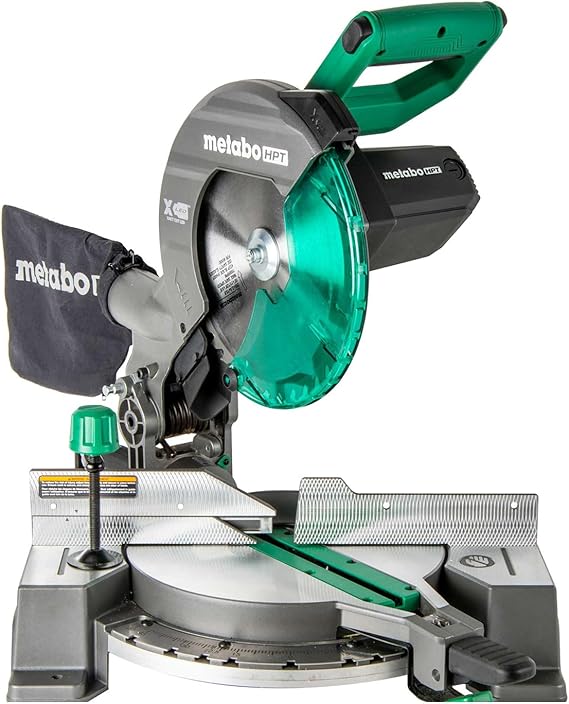 | Metabo HPT 10 Miter Saw | Check Price |
Our Top Picks 3  | DEWALT 20V MAX XR 12 | Check Price |
Our Selected Top 12 All Around Miter Saw Worth Buying
This list features carefully chosen miter saws designed for versatile use, with detailed insights on their performance, ideal users, and key advantages and disadvantages. Readers will find clear information to help match each saw’s strengths to their specific needs.
1. SKIL 10 Dual Bevel Sliding Compound Miter Saw MS6305-00
Power combined with precision makes the SKIL 10 Dual Bevel Sliding Compound Miter Saw stand out for anyone needing versatile cuts in woodworking or home projects. Its strongest suit lies in delivering smooth, detailed cuts quickly thanks to a 15-amp motor spinning at 4,800 RPM. Ideal for those who handle both framing and finish work.
Setup involves plugging in the corded electric saw and adjusting angles among its multiple stops. Daily use benefits from the dual bevel feature, allowing cuts up to 48° and 45° on both left and right sides without flipping the workpiece.
The LED shadow line gives a clear guide to place the blade exactly where it is needed, aiding accuracy on common angles and bevels up to 50°. It handles standard lumber dimensions like 2×12 crosscuts with ease.
The saw handles its main jobs like a champ, cutting cleanly through wood thanks to a solid 15 amp, 1800 watt motor, with 40 teeth on the blade ensuring detailed finishes. The build feels sturdy and stable during operation.
Positive feedback often highlights the precision of the LED shadow guide, while the most frequent complaint points to its bulkiness, making it less portable and a bit heavier than lighter models.
The LED shadow line guides ensure precise cuts appreciated in detailed projects, though the saw comes with a noticeable weight that limits easy transport. Its power allows smooth cutting of thick lumber, but those who need a lighter or battery-powered model might find its corded design inconvenient.
People working on varied and large-scale woodworking projects will find this saw fits their needs well. Those needing a lightweight or portable saw for quick job site work should consider different models better optimized for mobility. This saw suits a workshop setting best.
Pros
- Powerful 15 amp motor for quick cuts
- Dual bevel allows complex angle adjustments
- LED shadow line improves cutting precision
- Capable of cutting large lumber sizes
Cons
- Relatively heavy and bulky to move
- No cordless option for more portability
| Specification | Details |
|---|---|
| Power Source | Corded Electric |
| Voltage | 120 volts |
| Speed | 4800 rpm |
| Number of Teeth | 40 |
| Bevel Capability | Dual Bevel at 48° & 45° left and right |
| Cutting Angle | 50 degrees |
2. Metabo HPT 10 Compound Miter Saw C10FCG2
Metabo HPT 10 Compound Miter Saw C10FCG2 shines in delivering powerful, precise cuts with a lightweight design perfect for those who need a reliable, portable saw. It suits hobbyists and professionals who value accuracy and ease of transport without sacrificing cutting power.
Setting it up is straightforward, thanks to improved miter scale and controls that make angle adjustments simple. The 10-inch table offers solid support for materials, and the integrated vice clamping system keeps workpieces firmly in place, making everyday cutting smoother and safer.
Its 24-pound weight means it moves easily between job sites.
The saw’s 15-Amp motor runs at up to 5,000 RPM, providing clean, precise cuts on wood. Solid construction feels durable but lightweight, making it easy to carry.
Praise often highlights how accurate the cuts are and how easy it is to move. A common complaint is the single bevel design, which limits cutting angles on one side.
Precise cutting is praised consistently, backed by a strong motor and stable design. However, lacking double bevel restricts cutting flexibility, which some users note when handling complex angles.
Anyone focused on portability and accurate straight or single bevel cuts will appreciate this model. Users needing double bevel capability should consider alternative saws tailored to more complex angle adjustments.
Pros
- Lightweight and easy to carry
- High power with 15-Amp motor
- Accurate cuts with enhanced miter scale
- Secure clamping system for safety
Cons
- Single bevel limits angle options
- Relies on power cord; no cordless option
| Specification | Details |
|---|---|
| Power Source | Corded Electric |
| Voltage | 120 volts |
| Wattage | 1950 watts |
| Cutting Angle | 52 degrees |
| Number of Teeth | 40 |
| Weight | 24 lbs |
3. DEWALT 20V MAX XR 12 Double Bevel Sliding Miter Saw DCS785B
Cutting through wood projects feels smooth and cordless with the DEWALT 20V MAX XR 12 Double Bevel Sliding Miter Saw. Ideal for hobbyists and pros needing a blend of portability and power, its biggest strength lies in handling wide and tall materials while running on dependable battery power.
Setting it up takes moments since it’s battery-powered, meaning no cords in the way. The sliding feature expands the cutting range, while the double bevel adjustment lets you make angled cuts on both sides without flipping the workpiece. Dust collection captures almost all debris, keeping your workspace clean and your tools ready for the next cut.
The saw delivers precise cuts on large baseboards and crown moldings thanks to a sharp 60-tooth blade and 250 watts of power. Its solid build is lightweight enough to carry but sturdy for tough materials.
Users note it offers lots of battery life for multiple cuts, though some find the 22.5-degree cutting angle limits more complex angles.
Strong praise centers on the extensive cut capacity and long-lasting battery performance that keeps work uninterrupted. The main complaint focuses on the limited cutting angle, which can restrict certain types of angled cuts.
People who need a cordless saw for wider boards and prefer easy dust cleanup will appreciate this tool. Those requiring a wider range of bevel angles might look for a different model with more flexibility.
Pros
- Largest cut capacity for a 20V max miter saw
- Efficient dust collection captures 97%
- Compatible with full DEWALT 20V and FlexVolt batteries
- Lightweight and easy to transport
Cons
- Limited cutting angle of 22.5 degrees
- Not included with battery or charger
| Specification | Details |
|---|---|
| Power Source | Battery Powered |
| Voltage | 20 volts |
| Number of Teeth | 60 |
| Cutting Angle | 22.5 degrees |
| Wattage | 250 watts |
4. DEWALT 20V MAX 7-1/4 Miter Saw DCS361B

Perfect for woodworkers wanting portability without sacrificing accuracy, the DEWALT 20V MAX 7-1/4 Miter Saw DCS361B stands out for its compact design and precise cut line system. Its biggest strength lies in combining lightweight convenience with clear, adjustment-free cut visibility.
Daily use is easy thanks to the integrated cut line cross-cut positioning system, which means you don’t need to fiddle with adjustments before making cuts. Setting up the miter angles is quick because of the cam lock handle and 11 positive stops.
At 30 lbs., it’s light enough to carry around the job site but feels stable when cutting. The oversized bevel scale also helps with making accurate angle adjustments on the fly.
Performance meets expectations with smooth, clean cuts and solid motor speed at 4500 rpm. The brushed motor powers through typical tasks without overheating. Built with a machined base fence and an adjustable stainless steel miter detent plate, it feels durable.
The strongest praise highlights its accuracy, while some reviews point out the single battery requirement as a limit during extended work.
The most praised feature is how accurately the cut line system lets you position cuts without extra adjustments. The most common complaint centers around its reliance on a single battery, which can slow down work for longer projects without spares. This saw feels balanced between portability and performance.
Anyone who needs a lightweight saw for occasional detailed cuts on site will get a lot of value here. Those who require nonstop operation or heavier cutting power might consider options with corded power or dual batteries instead.
Pros
- Compact and lightweight for easy transport
- Integrated cut line for accurate cuts
- Quick miter angle setting with cam lock
- Durable machined base fence
Cons
- Runs on only one battery, limiting continuous use
- Bevel adjustments require careful handling
| Specification | Details |
|---|---|
| Power Source | Battery Powered |
| Voltage | 20 volts |
| Speed | 4500 rpm |
| Weight | 30 lbs. |
| Number of Teeth | 80 |
| Cutting Angle | 90 degrees |
5. DEWALT 12 Double Bevel Miter Saw DWS780

Solid steel and aluminum parts make this saw a reliable tool for serious woodworkers looking for accuracy. Best suited for anyone who works regularly with trim, crown molding, or framing, its most notable feature is a precise blade positioning system that means cuts line up exactly without constant fiddling.
Setting it up is straightforward with clear weight and size that don’t overwhelm a standard workbench. The XPS LED shadow line technology projects a clear cutting guide, making day-to-day alignment quick and reducing mistakes. Dust tends to stay contained thanks to a system that captures the majority of debris, which keeps work areas cleaner without extra cleanup time.
Power is consistent from the 1100 watt motor running at 3800 rpm and the saw cuts through hardwood smoothly. It handles bevel angles with double bevel capability, making complex cuts much easier. The build feels solid and deliberate, though the saw is a bit on the heavier side and might not suit those needing extreme portability.
The precise blade positioning system is widely praised for simplifying accurate cuts by eliminating guesswork. A commonly mentioned drawback is the weight, which makes it less convenient for quick moves around a job site.
Those who often make detailed, angled, or bevel cuts will find this saw reliable and accurate. Users needing a lighter tool for easy transport during smaller tasks might want to consider other options.
Pros
- Integrated cutline blade positioning system for accuracy
- XPS LED shadow line improves cutting precision
- Efficient dust collection captures over 75% of dust
- Powerful 1100 watt motor maintains consistent speed
Cons
- Relatively heavy and less portable
- Requires AAA battery for LED system
| Specification | Details |
|---|---|
| Power Source | Corded Electric |
| Speed | 3800 rpm |
| Number of Teeth | 80 |
| Voltage | 110 volts |
| Bevel Capability | Double Bevel |
6. DEWALT 20V MAX XR 10 Double Bevel Miter Saw DCS714B

Power stands out right away with the DEWALT 20V MAX XR 10 Double Bevel Miter Saw, perfect for anyone needing cordless convenience without sacrificing cutting strength. Its biggest strength is handling heavy cuts while running off a 20V battery that lasts longer than you’d expect.
Setting it up feels straightforward since it’s cordless and lightweight, making it easy to move around the workspace. The bevel gear transmission helps keep battery use efficient, so you spend less time charging and more time cutting.
Dust collection works well, capturing up to 97% which means less cleanup hassle after jobs. You can cut through large materials like 6-inch horizontal stock or 5-1/4 inch baseboards comfortably.
It handles thick cuts smoothly and precisely, showing real power for a 20V compact saw. The build feels solid but light enough for transport. Most praise points to its long battery runtime, being able to handle hundreds of cuts on a single charge.
Common complaints often mention the battery and charger being sold separately, which can add extra cost.
Success comes from its impressive runtime and power during heavy cutting sessions. The biggest drawback is that the battery isn’t included, which can be an unexpected cost for some users.
Those needing a portable saw with strong cordless performance will appreciate this model. Anyone looking for wider bevel angles or a ready-to-use package without extra purchases may want to consider other options.
Pros
- Powerful motor for a 20V compact saw
- Captures up to 97% of dust
- Double bevel for versatile angled cuts
- Lightweight for easy maneuvering
Cons
- Batteries and charger sold separately
- Maximum cutting angle limited to 22.5 degrees
| Specification | Details |
|---|---|
| Power Source | Battery Powered |
| Voltage | 20 volts |
| Number of Teeth | 32 |
| Cutting Angle | 22.5 degrees |
| Wattage | 250 watts |
7. DEWALT 12 Single Bevel Compound Miter Saw DWS715

Powerful and precise, the DEWALT 12 Single Bevel Compound Miter Saw DWS715 suits those wanting accuracy in cutting with solid build quality. Its biggest strength is the combination of a 14 positive-stop stainless-steel miter detent plate and a tall sliding fence that handles mid-size lumber easily.
Setting it up is straightforward with the machined base fence support keeping everything aligned. The 12-inch blade runs at 4500 rpm, powered by a 1800-watt brushless motor that delivers smooth cuts.
Day-to-day use benefits from the saw’s ability to bevel left up to 48 degrees and a precise miter system, making angle adjustments quick and repeatable.
Cutting through 2×8 lumber at 90 degrees and 2×6 at 45 degrees meets most project needs with little fuss. The build feels solid, and the tall sliding fence support adds to versatility. The strongest praise highlights its accuracy and blade power; a common complaint involves the limited bevel range to the right by only 3 degrees, restricting some cuts.
Many appreciate its accurate stops and smooth blade speed for clean cuts. However, the restricted bevel range to the right side affects flexibility during angled cuts. This single bevel design meets most cutting needs but limits complex bevel angles.
People working with common framing and trim tasks will find this saw fitting well, especially when accurate miter cuts are needed regularly. Those requiring extensive beveling on both sides might consider a dual bevel model instead.
Pros
- Accurate 14 positive miter stops
- Brushless motor runs quietly
- Supports tall 5-1/2-inch base vertically
- Solid machined base fence support
Cons
- Limited bevel to the right only 3 degrees
- Only single bevel, no dual bevel capability
| Specification | Details |
|---|---|
| Power Source | Corded Electric |
| Voltage | 120 |
| Speed | 4500 rpm |
| Wattage | 1800 watts |
| Cutting Angle | 90 degrees |
| Bevel Range | 0-48° left, 0-3° right |
8. Makita 10 Dual-Bevel Sliding Compound Miter Saw LS1019L

Handling a range of miter cuts on the job can be tricky, especially with larger or more detailed trims. The Makita 10 Dual-Bevel Sliding Compound Miter Saw LS1019L fits well for anyone needing accurate, versatile crosscuts with a tool that takes up less space than usual for sliding saws. Its biggest strength is the combination of compact design and impressive cutting capacity that rivals bigger saws.
Setting up includes attaching the blade and placing the saw where it fits best. Thanks to the unique 2-steel rail sliding system, smooth single-slide action is possible even when the saw is flush against a wall, which saves space.
The linear ball bearing system keeps cuts precise day after day. Its weight at just under 58 pounds makes it easier to move around the jobsite without heavy lifting struggles.
The saw handles everything from crown molding cuts to vertical cuts with ease, driven by a 1510-watt motor running at 3200 rpm. Solid construction with a direct drive gearbox ensures steady power. People often praise its accuracy and space-saving design.
The main criticism mentions the saw’s price and occasional challenges with dust collection during heavy use.
Most users appreciate the dead-on accuracy and space-saving slide-glide system, making precise cuts easier in tight spots. Commonly mentioned downsides include some dust escaping during use despite the guard system and a higher cost compared to other saws.
People who need solid cutting capacity without a bulky saw and value precision will find this model suitable. Those who prioritize lighter weight or better dust management might want to explore other options.
Pros
- Compact design allows flush wall placement
- Highly accurate linear ball bearing system
- Strong 1510-watt motor power
- Dual bevel and sliding feature
Cons
- Heavier than smaller non-sliding saws
- Dust collection could be improved
| Specification | Details |
|---|---|
| Blade Size | 10″ |
| Voltage | 120 volts |
| Speed | 3200 rpm |
| Weight | 57.9 lbs. |
| Cutting Angle | 90 degrees |
9. BOSCH 18V 12 Dual-Bevel Slide Miter Saw GCM18V-12SDN

Cutting up to 3.5 inches deep and 14 inches wide, this saw suits contractors and serious DIYers who need mobility without sacrificing capacity. Its battery-powered design delivers pro-level performance on the go, making it the best all-around miter saw for jobsites that demand both power and convenience.
Setup is straightforward with the easy-to-read scale and bevel detents that lock into common angles quickly. The Shadow LED cut line helps line up cuts precisely without reaching for extra tools. Being brushless and battery-powered means fewer cords and less maintenance, which makes daily use smoother and less tiring on the job.
Strong build quality supports its large cutting capacity and dual-bevel design, allowing compound cuts on either side of the workpiece with confidence. It performs consistently across a variety of materials with a sharp 60-tooth blade.
Common praise highlights its balance between lightweight portability and professional cutting power, while some find the battery life could last longer on bigger projects.
The cut line feature is widely praised for speeding up setup and increasing precision on the move. Most users notice the battery runs out quicker during heavy use, which can interrupt workflow on larger projects.
Those who prioritize cordless convenience and frequent angle adjustments will appreciate this saw most. Users tackling extended cutting sessions or larger material volumes may prefer a corded alternative for uninterrupted power.
Pros
- Strong, lightweight for jobsite mobility
- Accurate cut guidance with Shadow LED line
- Brushless motor for longer tool life
- Dual-bevel for versatile compound cuts
Cons
- Battery life can limit longer sessions
- Some find it pricier than corded options
| Specification | Details |
|---|---|
| Power Source | Battery Powered |
| Voltage | 18 volts |
| Cut Capacity | 3.5 in. depth, 14 in. width/crosscut |
| Number of Teeth | 60 |
| Blade Shape | Rectangular |
10. DEWALT 20V MAX 7-1/4 Miter Saw DCS361M1

Ideal for DIYers and professionals needing cordless convenience, this miter saw stands out with its long-lasting 20V Max battery. It’s perfect for those who want reliable power without the hassle of cords, while still handling a variety of cuts accurately.
Setup is straightforward with the integrated cut line system that shows exactly where the blade will hit, no adjustments needed. Weighting just 31.6 pounds, it’s easy to carry between jobs and fits nicely in tighter spaces. Changing angles is fast thanks to the cam lock miter handle and the oversized bevel scale makes fine-tuning simple, saving time on each cut.
Cutting through nested crown or baseboard goes smoothly with the 3750 rpm blade spinning powerfully. Build quality feels solid with stainless steel components ensuring precise stops for common angles, while brushless technology helps extend the tool’s life. Most users appreciate the accuracy, though some mention that the battery life could be limiting for larger projects.
Users find the saw impressively accurate thanks to the integrated cut line system and positive miter stops. The longest-lasting feature tends to be the battery life, which some find insufficient for heavy or continuous use.
People doing moderate to light cutting projects who value portability will appreciate this saw. Those needing longer runtime or cutting larger materials regularly should consider a different saw or additional batteries.
Pros
- Lightweight for easy transport and storage
- Accurate cut line indication without adjustments
- Brushless motor extends tool life
- Quick miter angle adjustments with cam lock handle
Cons
- Battery life may limit extensive work periods
- Blade size restricts very large cuts
| Specification | Details |
|---|---|
| Power Source | Battery Powered |
| Voltage | 20 volts |
| Speed | 3750 rpm |
| Number of Teeth | 60 |
| Cutting Angle | 48 degrees |
11. DEWALT 12 Double Bevel Sliding Compound Miter Saw DWS779

Exceptional power and versatility put this miter saw a step above most for anyone needing precise cuts on larger lumber. Ideal for woodworkers and contractors working with crown molding and dimensional lumber, the standout feature is its tall sliding fences that handle wide crown and base moldings with ease, saving time and frustration.
Setup involves plugging in to a standard 120-volt outlet with a 15 amp motor ready to run at 3,800 rpm. The dust collection system catches most sawdust, reducing cleanup, and the included dust bag makes emptying simple.
Adjusting the stainless-steel miter detent plate with 10 stops helps dial in angles quickly, while the sliding fences move smoothly to support various molding sizes or slide away for bevel cuts.
Cutting through 2 x 14 lumber at 90° and 2 x 10 at 45° is smooth and consistent, thanks to the 80-tooth blade and powerful motor. Solidly built with precision adjustments for miter angles up to 60° right and 50° left, plus bevels at 49° both directions, it handles complex cuts without losing accuracy. Praise often centers on the dust control, while users find the saw somewhat heavy to move around.
Most users appreciate the dust collection system that captures over 75% of sawdust, helping keep the workspace cleaner during extended use. The motor’s consistent 3,800 rpm speed powers through thick lumber, though the saw’s weight can make repositioning cumbersome.
This saw suits professionals and serious woodworkers who cut large molding and dimensional lumber regularly. Those needing lighter, more portable saws or very specialized angle capabilities might want to consider alternatives.
Pros
- Supports large crown and base moldings effortlessly
- Efficient dust collection captures over 75% sawdust
- 15 amp motor delivers strong cutting power
- Adjustable miter detent plate for accurate angles
Cons
- Relatively heavy, less portable for frequent moves
- Bevel and miter limits may restrict some specialty cuts
| Specification | Details |
|---|---|
| Power Source | Corded Electric |
| Voltage | 120 volts |
| Current Rating | 15 A |
| Speed | 3800 rpm |
| Number of Teeth | 80 |
| Cutting Angle | 45 degrees |
12. DEWALT 12 Double Bevel Compound Miter Saw DWS716XPS

DEWALT 12 Double Bevel Compound Miter Saw DWS716XPS excels at precise angled cuts and suits woodworkers who need versatility and accuracy. Its strongest point is the dual bevel function, cutting both left and right up to 48 degrees with solid positive stops that keep every measurement consistent.
Daily work becomes more straightforward thanks to the tall sliding fences supporting large crown and base moldings. The cam lock miter handle allows quick angle adjustments with detent override for custom cuts.
Setting it up is pretty straightforward for a corded electric saw, and the brushless motor ensures smooth operation without extra noise or drag.
Cutting performance is reliable at 4500 rpm, slicing through with a 12-inch blade built for repeated accuracy. The stainless-steel miter detent plate stays durable over time for repeatable angles; users often praise this precision.
Some note the saw’s heavier weight can make transport a bit tricky, though its solid build favors stability during use.
Users value the saw’s precise angle stops and durable detent plate for accurate repetitive work. The most common drawback mentioned involves its relatively heavy body, which can be less ideal for transporting between jobsites.
Ideal for craftspeople who need reliable, varied cuts on bulkier moldings and framing challenges. Those needing a lighter, cordless option might want to explore other models better suited for portability.
Pros
- Double bevel cuts both left and right
- Strong detent plate with 14 positive stops
- Tall sliding fences hold large moldings securely
- Brushless motor offers smooth, consistent power
Cons
- Heavier weight makes moving less convenient
- Requires corded power outlet for operation
| Specification | Details |
|---|---|
| Power Source | Corded Electric |
| Voltage | 120 |
| Speed | 4500 rpm |
| Number of Teeth | 30 |
| Cutting Angle | 50 degrees |
| Wattage | 1800 watts |
Best All Around Miter Saws Comparison Table
| Product | Power Source | Cutting Angle | Number of Teeth | Bevel Capability |
|---|---|---|---|---|
| SKIL 10 Sliding Miter Saw | Corded Electric | 50 degrees | 40 | Yes |
| Metabo HPT 10 Miter Saw | Corded Electric | 52 degrees | 40 | – |
| DEWALT 20V MAX XR 12 | Battery Powered | 22.5 degrees | 60 | Yes |
| DEWALT 20V MAX 7-1/4 Miter | Battery Powered | 90 degrees | 80 | Yes |
| DEWALT 12 Double Bevel Saw | Corded Electric | 90 degrees | 80 | Yes |
| DEWALT 20V MAX XR 10 | Battery Powered | 22.5 degrees | 32 | Yes |
| DEWALT 12 Single Bevel Saw | Corded Electric | 90 degrees | 80 | – |
| Makita 10 Dual-Bevel Saw | Corded Electric | 90 degrees | 60 | – |
| BOSCH 18V 12 Slide Miter | Battery Powered | – | 60 | – |
| DEWALT 20V MAX 7-1/4 Kit | Battery Powered | 48 degrees | 60 | – |
| DEWALT 12 Sliding Compound Saw | Corded Electric | 45 degrees | 80 | Yes |
| DEWALT 12 Compound Miter Saw | Corded Electric | 50 degrees | 30 | – |
- Power SourceCorded Electric
- Cutting Angle50 degrees
- Number of Teeth40
- Bevel CapabilityYes
- Power SourceCorded Electric
- Cutting Angle52 degrees
- Number of Teeth40
- Bevel Capability–
- Power SourceBattery Powered
- Cutting Angle22.5 degrees
- Number of Teeth60
- Bevel CapabilityYes
- Power SourceBattery Powered
- Cutting Angle90 degrees
- Number of Teeth80
- Bevel CapabilityYes
- Power SourceCorded Electric
- Cutting Angle90 degrees
- Number of Teeth80
- Bevel CapabilityYes
- Power SourceBattery Powered
- Cutting Angle22.5 degrees
- Number of Teeth32
- Bevel CapabilityYes
- Power SourceCorded Electric
- Cutting Angle90 degrees
- Number of Teeth80
- Bevel Capability–
- Power SourceCorded Electric
- Cutting Angle90 degrees
- Number of Teeth60
- Bevel Capability–
- Power SourceBattery Powered
- Cutting Angle–
- Number of Teeth60
- Bevel Capability–
- Power SourceBattery Powered
- Cutting Angle48 degrees
- Number of Teeth60
- Bevel Capability–
- Power SourceCorded Electric
- Cutting Angle45 degrees
- Number of Teeth80
- Bevel CapabilityYes
- Power SourceCorded Electric
- Cutting Angle50 degrees
- Number of Teeth30
- Bevel Capability–
How to Choose the Right Miter Saw
Choosing the right miter saw involves considering blade size, cutting capacity, and ease of adjustments to ensure precise, efficient cuts. Prioritizing these factors helps avoid mistakes, saves time, and reduces the need for costly replacements or repairs in the long run.
Blade Size and Cutting Capacity
Trying to cut a wide piece of lumber only to find your saw’s blade won’t go deep enough is a common frustration. Most models come with a 10- to 12-inch blade, which generally allows for cuts up to about 4 inches thick and 6-8 inches wide, depending on the saw’s design.
Larger blades give more cutting depth, which is necessary for framing lumber or wide boards.
Blade compatibility also matters. Some saws accept a variety of blade types like carbide-tipped blades for wood or abrasive blades for metal.
Being limited to one blade type restricts your ability to work with different materials. Knowing the max cutting capacity and whether the saw can handle blades suited for your specific projects saves time and hassles on the job.
Motor Power and Performance
A motor rated between 12 and 15 amps usually provides enough power for clean cuts through hardwood and thick molding. The motor’s RPM plays a role too; a speed around 4500-5000 RPM balances cutting speed with smoothness.
Slower motors may bog down or leave rough edges, especially on denser materials.
Good saws maintain consistent power without bogging down during extended cuts, avoiding burnt wood and uneven bevels. Cheap or underpowered motors can struggle with repetitive heavy tasks, leading to premature wear or stalling. Choosing a higher wattage or amp rating often leads to more reliable performance in real-world use.
Adjustability and Precision Features
Making a bevel or miter cut is tricky without precise angle adjustments. Saw models offering a full 0-45 degree range, with easy-to-turn knobs or levers, streamline workflow.
Clear angle markings and audible or tactile detents help line up standard cuts, like 45 or 22.5 degrees, quickly and accurately.
Features like positive stops lock angles in place and prevent accidental shifts mid-cut. Laser guides or LED markers improve cut line visibility, reducing guesswork.
Without these, users often spend extra time measuring or end up with waste due to inaccurate cuts.
Portability and Size
Transporting heavy, bulky saws between job sites becomes a chore if the saw weighs more than 50 pounds or lacks compact dimensions. Models with built-in handles or folding bases cut down on setup effort and fit better in trucks or small workshops.
The balance between size and stability is important. A lightweight saw might be easier to carry but can wobble during cuts, while a larger saw stays steady but takes up more storage space. Finding a model that folds or collapses without sacrificing a stable base helps both mobility and safety.
Safety Features
Blade guards are essential to protect hands from accidental contact. Lockout switches prevent the saw from starting unexpectedly, especially convenient when changing blades.
Some saws also feature trigger locks that avoid accidental startups.
Effective dust collection ports connect to vacuums or bags to keep the cutting line visible and reduce sawdust buildup. Ergonomic handles and balanced weight reduce operator fatigue during longer sessions, lowering the chance of sloppy cuts or mishandling the tool. Neglecting these safety elements leads to more frequent accidents and discomfort.
Maximizing Accuracy: Tips for Perfect Miter Saw Cuts
Consistent accuracy in miter saw cuts often comes down to proper setup and technique. One key point is to always double-check your angle settings before making a cut.
Fine adjustments can prevent costly mistakes, especially with trim or framing pieces. Using a reliable square to verify blade alignment against the fence helps maintain precision over time.
Other practical tips include:
- Clamping your workpiece securely to avoid any movement during cutting.
- Making test cuts on scrap wood to confirm settings are correct before using your valuable material.
- Using a sharp blade designed for your specific type of wood or finish to reduce tear-out and improve cut quality.
Regularly cleaning sawdust and checking the zero point helps keep cuts consistent. Also, consider the saw’s fence and table condition, as any warping can affect accuracy significantly.
Essential Maintenance Practices to Prolong Your Miter Saw’s Lifespan
Regular maintenance keeps a miter saw working safely and efficiently over time. Removing sawdust buildup after each use is important since debris can clog moving parts and affect accurate adjustments. A simple compressed air blowout or brush works well for this task.
Key upkeep tasks include:
- Lubricating pivot points periodically with a light machine oil to reduce wear and prevent stiffness.
- Inspecting the blade for sharpness and replacing it if it becomes dull or damaged to ensure smooth cuts.
- Checking electrical cords and switches for signs of wear or damage to avoid potential hazards.
Calibrating the saw’s angles occasionally helps maintain reliable setting accuracy. Following the manufacturer’s recommendations also extends the tool’s usable life substantially.
Comparing Sliding vs. Compound Miter Saws: Which Is Right for You?
Sliding miter saws have rails that allow the blade to move forward and backward, which increases cutting capacity, especially for wider material like lumber or larger molding. This extra reach is convenient for cutting crown molding or door jambs that exceed standard crosscut widths.
Compound miter saws enable angle and bevel cuts simultaneously and are useful for projects needing compound angles, such as picture frames or complex trim work. They generally take up less space than sliding models and are lighter, which may suit smaller workshops.
Choosing between them depends on the typical size and complexity of cuts. Sliding models offer more versatility for bigger pieces, while compound saws are often preferred for precision and maneuverability in smaller tasks.
People Also Asked
How Do I Safely Use an All Around Miter Saw?
Keep your hands at a safe distance from the blade and use clamps to hold the workpiece steady. Always wear safety goggles and check that the saw is on a stable surface before cutting. It’s best to let the blade reach full speed before making any cuts.
What Is the Ideal Blade Size for a Versatile Miter Saw?
A 12-inch blade works well for most general cutting tasks and fits most miter saws. It can handle larger boards than smaller blades, making it easier to cut wide baseboards or trim. Blades with 80 teeth provide smoother cuts for finish work.
How Long Does a Typical Miter Saw Last with Regular Use?
With regular use and proper maintenance, a miter saw can last 10 years or more. Replacing blades periodically and checking the motor and moving parts helps keep it running smoothly. Avoid forcing cuts to prevent premature wear.
What Are Common Problems with All Around Miter Saws?
Common issues include blade drift, where cuts aren’t perfectly angled, and motor overheating from prolonged use without breaks. Dust buildup can also affect accuracy and saw performance if not cleaned regularly. Loose fences can throw off measurements.
How Should I Maintain and Clean My Miter Saw for Longevity?
Clean dust and debris from the blade, table, and motor vents after each use to prevent buildup. Lubricate moving parts occasionally with a dry lubricant instead of oil to avoid attracting dust. Store the saw covered to keep it free from rust and dirt.
Conclusion
Accuracy, blade size, and ease of adjusting angles are the most important factors when choosing a miter saw that can handle a variety of projects. A saw that cuts cleanly and lets you quickly switch between compound, bevel, and miter cuts will save time and improve results.
Durability also matters since a solid build means the saw will stay aligned and perform well over years of use.
Consider how much space you have for the saw, and how often you’ll use it before deciding on a model. A smaller saw fits tight workshops but can limit material size, while a larger one handles big stock but needs more room.
Your budget and project scope also affect the choice. Check the comparison table and detailed picks above for options that suit different needs and work styles.

I’m Ryan Mitchell, an automotive writer with a solid background in vehicle diagnostics and repair. I cover brake problems, transmission issues, dashboard warning lights, battery troubles, and routine servicing. I explain technical problems in plain language so drivers understand what’s going wrong, talk confidently with their mechanic, and make smarter repair decisions.


