Top 12 Best Miter Saw for Cutting Aluminum You Need Now
Cutting aluminum with a standard miter saw often leads to rough edges, overheating, or rapid blade wear. The best miter saw for cutting aluminum avoids these issues by using the right blade and offering precise control over cutting speed. This kind of saw handles the softer metal without causing it to melt or deform, saving time and material in projects like framing or trim work.
Key factors that separate a good miter saw for aluminum from a poor one include blade quality, motor power, and dust management. Carbide-tipped blades designed specifically for metal cutting last longer and produce cleaner cuts.
A motor with at least 12 amps keeps the blade spinning steadily without bogging down, while an efficient dust collection system helps manage fine aluminum shavings that can be abrasive and hazardous. Proper clamping and a stable base are also critical to avoid movement during cuts.
Need a Quick Check?
| Image | Product | Price |
|---|---|---|
Our Top Picks 1 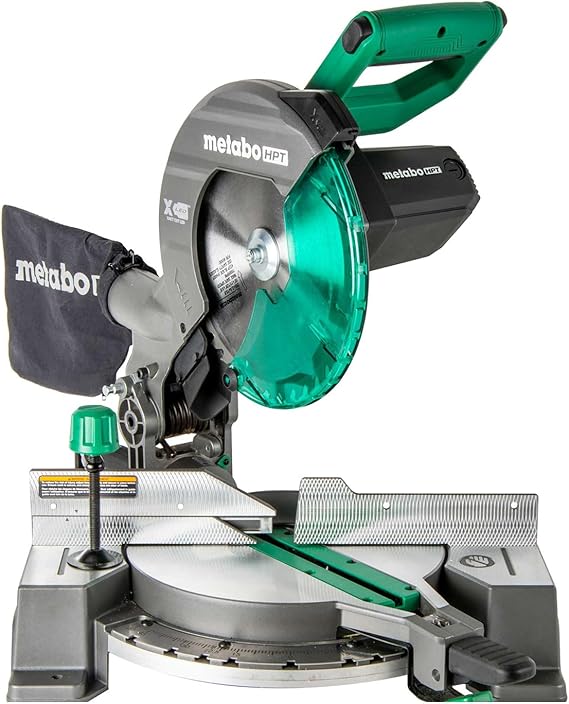 | Metabo HPT Miter Saw | Check Price |
Our Top Picks 2  | SKIL Dual Bevel Miter | Check Price |
Our Top Picks 3  | Evolution Sliding Miter | Check Price |
Our Selected Top 12 Miter Saw for Cutting Aluminum You Can Trust
This list features twelve carefully chosen miter saws designed for cutting aluminum, highlighting their performance, suitability for different users, and key strengths and weaknesses. Each review provides clear insights to help you find the right tool for your specific needs and projects.
1. Metabo HPT C10FCG2 Compound Miter Saw
Great for hobbyists and professionals working with aluminum, the Metabo HPT C10FCG2 Compound Miter Saw handles detailed cuts with strong precision. Its standout feature is the powerful 15-Amp motor that makes clean, sharp cuts without faltering.
Setting up the saw is straightforward thanks to the improved miter scale and controls, which make it easy to dial in accurate angles. The 10-inch table offers solid support for your aluminum pieces, while the vice clamping system keeps everything safely in place during cutting. At just 24 lbs, it’s simple to move around the workshop or take on-site without much hassle.
Cut quality is impressive with a no-load speed of up to 5,000 RPM, ensuring smooth, precise results on aluminum projects. The build is lightweight but solid enough for consistent use. Most users appreciate its power and portability as major pluses.
The common drawback noted is limited to its single bevel design, which might restrict some cutting angles.
The strong 15-Amp motor providing precise, clean cuts receives consistent praise. However, the single bevel feature is a frequent point of concern for those needing more flexible angle options.
This saw fits well with anyone who prioritizes power and portability for aluminum cutting. For those needing compound bevels on both sides or battery use, another model might be better suited.
Pros
- Powerful motor for smooth aluminum cuts
- Lightweight at 24 lbs for easy transport
- Reliable vice clamp for secure hold
- Clear, accurate miter scale
Cons
- Single bevel limits angle versatility
- No cordless option available
| Specification | Details |
|---|---|
| Power Source | Corded Electric |
| Motor | 15-Amp |
| Blade Diameter | 10 inch |
| No-load Speed | 5,000 RPM |
| Weight | 24 lbs |
| Cutting Angle | 52 degrees |
2. SKIL MS6305-00 Dual Bevel Sliding Miter Saw
Strong power and versatile angles make this saw a solid choice for precise aluminum cuts. Ideal for those who need detailed, accurate bevel cuts with good cutting capacity.
Its LED shadow line is a standout for keeping cuts accurate without relying on laser guides.
Setup is straightforward with corded electric power and a stable base for cross-cutting. The dual bevel feature allows you to tilt the saw head both ways, making angled cuts easier on aluminum extrusions. The LED shadow line helps line things up clearly.
Handling feels balanced but firm given the motor size, so it stays steady during operation.
At 15 amps and hitting 4,800 RPM, it tackles aluminum smoothly without bogging down. The build holds up to regular use with mostly metal parts giving durability and a solid feel. Positive stops at common angles simplify repetitive cuts.
Most praise focuses on cutting precision and adjustable bevel angles. The main complaint is the 40-tooth blade, which may dull faster on metal.
Many appreciate the precision from the LED shadow line and the ability to cut at multiple bevel angles. The main downside noted is the 40-tooth blade, which some find wears out faster when used on aluminum regularly, requiring frequent sharpening or replacement.
The saw suits those who prioritize accurate bevel cuts and solid power for medium-sized aluminum materials. People needing a lighter or more portable option might look for a smaller saw or one with easier blade changes designed specifically for metal.
Pros
- Powerful 15 AMP motor delivers fast cuts
- Dual bevel allows versatile angle cutting
- LED shadow line improves cutting accuracy
- Capable of cross-cutting 2×12 lumber
Cons
- 40-tooth blade may dull quicker on aluminum
- Relatively heavy, not ideal for frequent moves
| Specification | Details |
|---|---|
| Power Source | Corded Electric |
| Current Rating | 15 A |
| Speed | 4800 rpm |
| Voltage | 120 volts |
| Bevel Capability | Dual Bevel: 48° & 45° left, 0°, and 45° right |
| Cutting Angle | 50 degrees left and right |
3. Evolution R185SMS+ Sliding Miter Saw
Evolution R185SMS+ Sliding Miter Saw is designed for cutting aluminum and other metals with precision and minimal heat. Ideal for tradespeople who need clean cuts without sparks or coolant, its main strength lies in delivering smooth, workable finishes right off the blade.
Setup involves connecting to a standard 120-volt outlet, which powers its brushless 15 amp motor. Day-to-day operation benefits from the high torque gearbox that reduces motor strain and extends blade life. Adjusting the cutting angle to 45 degrees and sliding the saw smoothly accommodates various metal shapes, from sheets to tubes.
The saw cuts steel and aluminum effectively, relying on a dry cutting process that avoids sparks and excessive heat. Its sturdy construction includes a 60-tooth round blade spinning at 3700 rpm, making for clean, quick cuts.
Customers appreciate the long blade life averaging 1000 cuts, though some mention its weight can be cumbersome for transport.
The strongest point is how clean and fast the saw cuts metal with very little heat or sparks, making it easy to work with straight away. Most users note the impressive blade longevity and quiet operation, while some find the saw’s weight a downside when moving it regularly between job sites.
Tradespeople working mainly on-site cutting steel plates and tubing will appreciate this saw’s durability and clean cuts. Those needing a lighter, battery-powered option for easier portability might want to look elsewhere, as this model requires a steady electric supply and has a solid build weight.
Pros
- Minimal heat and sparks when cutting metal
- Long blade life averaging 1000 cuts in mild steel
- Brushless motor reduces maintenance
- Powerful 15 amp motor with high torque gearbox
Cons
- Relatively heavy for frequent transport
- Only suitable for corded electric power
| Specification | Details |
|---|---|
| Power Source | Corded Electric |
| Voltage | 120 volts |
| Speed | 3700 rpm |
| Number of Teeth | 60 |
| Cutting Angle | 45 degrees |
| Wattage | 1200 watts |
4. DEWALT DWS715 12-Inch Compound Miter Saw

Cutting aluminum requires a saw that combines power with precision, and this 12-inch compound miter saw fits the bill perfectly. Great for anyone handling aluminum regularly, its strongest point is the 14 positive stops that lock in common miter angles, making repetitive cuts accurate and fast without needing constant recalibration.
Setting it up is straightforward, especially with the tall sliding fence that supports up to 5-1/2-inch base vertically, giving good stability when dealing with metal pieces. The stainless-steel miter detent plate adds to the precision, and the brushless motor means it runs smoothly without much vibration. The saw is corded electric, so power remains steady throughout long jobs.
Cutting through aluminum at 4500 rpm with an 80-tooth blade results in clean edges that rarely need filing. The build feels solid, especially with the machined base fence support that helps keep everything aligned over time. Praise focuses on the accurate miter system and quiet operation, while the most common complaint is around the limited bevel range to the right, only 3 degrees.
The saw delivers consistent and precise cuts thanks to the stainless-steel miter detent plate and brushless motor, which many highlight as its best features. On the downside, the minimal bevel range on the right side restricts cutting angles for some projects.
Ideal for those who need frequent, accurate aluminum cuts paired with strong setup support. Choose a different model if wider bevel angles or larger cross cut capacity are essential for your work.
Pros
- 14 positive stops on miter detent plate for accuracy
- Brushless motor reduces vibration and extends life
- Tall sliding fence supports large workpieces firmly
- Machined base fence support ensures solid alignment
Cons
- Bevel only goes 3 degrees to the right
- Limited cross cut capacity at 45 degrees
| Specification | Details |
|---|---|
| Power Source | Corded Electric |
| Voltage | 120 |
| Speed | 4500 rpm |
| Number of Teeth | 80 |
| Wattage | 1800 watts |
5. 10-Inch TCG Miter Saw Blade

Great value for anyone needing clean cuts on aluminum or non-ferrous metals. Works well with most common saw models thanks to its standard arbor size.
The standout feature is its 120-tooth design, delivering an impressively fine finish that’s hard to beat in this price range.
Setup is straightforward with the standard 5/8-Inch (16mm) arbor size, making blade changes quick and compatible with most miter saws. The 10-inch diameter and 2.8mm thickness balance the blade nicely for stable cutting, avoiding wobble while working through aluminum and plastic. Daily use remains smooth thanks to its precise construction, which keeps cutting quality consistent over time.
Cutting performance matches the professional-grade carbide construction. It slices through aluminum and similar materials with minimal burrs, leaving a clean edge each time.
The durability holds up well under regular use, though some have mentioned the fine tooth count can slow down cuts compared to blades designed for rougher work. It excels in accuracy with only minor trade-offs in speed.
Users appreciate the clean, fine finish and consistency thanks to the 120-tooth design and carbide build. The most frequent downside is the slower cutting speed compared to blades with fewer teeth, which can be noticeable in larger projects.
Perfect for anyone prioritizing smooth, precise edges on aluminum or plastic regularly. Those needing faster cuts or working with steel might want a different blade better suited to tougher materials or rougher jobs.
Pros
- 120 teeth for very fine, clean cuts
- Standard arbor fits most miter saws
- Durable carbide material holds quality longer
- Balanced thickness for stable cutting
Cons
- Cutting speed slower due to fine tooth count
- Only suitable for non-ferrous metals, no steel cuts
| Specification | Details |
|---|---|
| Blade Diameter | 10 inch |
| Thickness | 2.8 mm |
| Tooth Count | 120 |
| Arbor Size | 5/8-Inch (16 mm) |
| Material | High-grade carbide |
| Brand | TOYAKI |
6. LEXIVON LX-230 Aluminum Miter Saw Protractor

Crafted from CNC-machined anodized aluminum alloy steel, this protractor suits anyone needing precise angle transfers for miter saw cuts, especially on aluminum. Its biggest strength lies in the accuracy provided by laser-engraved scales and a smooth swiveling mechanism that eliminates guesswork during setup.
Setting it up is straightforward thanks to the laser-engraved scales that are easy to read. The internal Teflon O-ring allows smooth swiveling, so adjusting the angle is simple and precise.
Locking the angle in place feels secure, making day-to-day use for trim or crown molding work reliable without frequent recalibrations or slipping.
Performance holds up well with its solid 1/4-inch thick aluminum alloy that won’t bend like plastic counterparts. Accuracy on inside and outside corners is consistent, transferring angles directly to the saw for exact miter cuts.
Most praise focuses on the precision and durability, while a common complaint mentions the manual operation lacking power assistance.
The strongest praise is for its accuracy and sturdy aluminum construction, which resists bending unlike plastic options. The main complaint revolves around its manual operation, which some find less convenient for heavy or continuous work.
Those who need precise, repeatable angle settings for detailed finish carpentry and don’t mind manual adjustments will appreciate this tool. Users looking for powered or more automated solutions should consider other models designed for quicker, less hands-on use.
Pros
- Precise angle transfer with laser engraved scales
- Smooth swivel mechanism using Teflon O-ring
- Strong, bend-resistant aluminum alloy build
- Lockable design for secure positioning
Cons
- Manual power source means no motor assistance
- May require frequent angle adjustments on complex cuts
| Specification | Details |
|---|---|
| Power Source | Manual |
| Material | CNC-machined Anodized Aluminum Alloy Steel |
| Voltage | 230 volts |
| Thickness | 1/4-Inch |
| Features | Laser engraved scales, Lockable, Adjustable |
7. DEWALT DWS780 12-Inch Double Bevel Miter Saw

Powerful and precise, this miter saw suits anyone who needs to cut aluminum cleanly and accurately. Its integrated cutline blade positioning and XPS LED shadow line give excellent visual guidance, making it easy to place cuts exactly right every time.
Setting up involves plugging into a standard 110-volt outlet, and the machine feels steady and solid. The cutline system means you don’t have to worry about adjusting marks manually, and the dust collection system catches most of the mess from aluminum filings. The bevel capability adds flexibility when angled cuts are needed, making daily use straightforward and efficient.
With an 1100 watt motor spinning at 3,800 rpm, this saw handles aluminum cutting with ease, delivering clean edges on both straight and beveled cuts. It’s built tough, evident in its sturdy frame and reliable spindle lock. Praise is often given for its accuracy and dust control, though some users mention the size can make it less portable and the 12-inch blade limits cutting depth.
Accuracy and dust control receive consistent praise, showing this saw excels for aluminum cutting details. Size and blade limitations come up often, noting it may not be ideal for very large workpieces or for quick transport between jobs.
People focused on precision aluminum cutting in a workshop setting will appreciate the power and features. Users needing a lightweight or more compact saw should shop for alternatives better suited to frequent moves or bigger cuts.
Pros
- Accurate cutline blade positioning system
- XPS LED shadow line for precise alignment
- Strong, durable motor for heavy-duty use
- Efficient dust collection captures over 75%
Cons
- Relatively bulky and less portable
- 12-inch blade limits depth of cut
| Specification | Details |
|---|---|
| Power Source | Corded Electric |
| Voltage | 110 volts |
| Speed | 3800 rpm |
| Motor Power | 1100 watt, 15 amp |
| Blade Size | 12-Inch, Round |
| Bevel Capability | Yes |
8. DEWALT DCS714B 20V MAX XR 10-Inch Double Bevel Miter Saw

Power combined with cordless freedom makes this a standout for aluminum cutting projects. Perfect for users needing a portable, compact miter saw without sacrificing power, it handles base molding and framing boards with ease.
Its biggest strength lies in delivering consistent cuts while running on a 20V battery system.
Setup is straightforward since it’s cordless, avoiding the need to find a power outlet on job sites. The bevel gear transmission helps in maintaining efficient power use, stretching battery life during continuous work.
Dust collection captures up to 97% of particles, keeping the workspace cleaner. Adjusting bevel angles and fitting standard DEWALT batteries is user-friendly and quick.
Cut capacity allows slicing through 3-1/4 inch MDF and 2×4 SPF multiple times on a single charge. The build supports double bevel cuts up to 22.5 degrees making it versatile. Reviews note powerful motor performance but sometimes mention battery life limits during heavy use.
The lightweight design makes it easy to transport, though some find blade adjustment a bit fiddly.
The saw’s power and cordless design allow for many cuts on typical materials while keeping the job site cleaner due to excellent dust capture. Common feedback highlights the battery life as a constraint during extended use sessions.
Those who need portability with solid cutting power and moderate daily use will find this saw very satisfying. Heavy users requiring longer runtime might want to consider corded alternatives or multiple batteries.
Pros
- Compatible with DEWALT 20V MAX batteries
- Efficient dust collection captures 97% of dust
- Cuts up to 6 in. horizontally
- Lightweight and easy to carry
Cons
- Limited runtime on a single battery charge
- Bevel angle adjustment can be tricky
| Specification | Details |
|---|---|
| Power Source | Battery Powered |
| Voltage | 20 volts |
| Number of Teeth | 32 |
| Cutting Angle | 22.5 degrees |
| Wattage | 250 watts |
9. DEWALT DCS785B 20V MAX XR 12-Inch Double Bevel Sliding Miter Saw

Cutting aluminum accurately calls for a miter saw that can handle larger materials and precise angles. Perfect for both professional and serious DIY users, this cordless saw stands out for its cutting capacity, fitting bigger boards and trims with ease.
Setting it up is straightforward, especially with the cordless design that lets you move around without tripping over cords. The saw works well on a wide range of cuts thanks to its double bevel and sliding features. The dust collection captures most of the mess, making cleanup faster after every session.
Cutting through aluminum is smooth, thanks to a 60-tooth blade spinning at 250 watts. The saw feels solid yet remains lightweight enough for one-handed carry.
The blade angle can tilt to 22.5 degrees, giving flexibility on complex cuts. Most people appreciate how much dust it traps, though some find the battery life limiting during heavy projects.
Many users highlight the sharp cuts and versatility of this saw paired with its excellent dust collection system. At the same time, the battery sometimes runs out quicker than expected on heavy-duty cutting tasks, which can interrupt workflow.
People who need a cordless, flexible saw for larger aluminum trims and occasional portability will find it a good fit. Those working on very long projects or needing more extended cordless runtime might want to consider models with larger battery options or corded alternatives.
Pros
- Large cut capacity for wider aluminum pieces
- Compatible with DEWALT 20V MAX and FlexVolt batteries
- Efficient dust collection removes up to 97% dust
- Lightweight and easy to move around
Cons
- Battery life can limit longer cutting sessions
- Sliding feature adds bulk for tight space use
| Specification | Details |
|---|---|
| Power Source | Battery Powered |
| Voltage | 20 volts |
| Number of Teeth | 60 |
| Cutting Angle | 22.5 degrees |
| Wattage | 250 watts |
10. DEWALT DCS361B 20V MAX 7-1/4-Inch Miter Saw

4500 rpm speed gives this miter saw the power for clean, precise cuts on aluminum and other materials. It’s a lightweight, battery-powered tool designed for those who need a reliable saw that’s easy to move around and set up without cords getting in the way. Best for anyone cutting crown molding, baseboards, and trim.
Setup is straightforward thanks to the integrated cut line cross-cut positioning system showing exactly where the blade will cut, eliminating guesswork. Adjusting angles is smooth with the cam lock miter handle and oversized bevel scale.
The compact 30 lb design makes it easy to carry between job sites or around your workshop. Changing blades or batteries is quick with the spindle lock and the tool-free battery slot.
Cutting aluminum feels accurate and fast, benefiting from 80 teeth on the 7-1/4-inch blade and the power pack of 2600 watts. The stainless steel miter detent plate with 11 stops holds angles steady for repeat cuts. The build quality is solid, with a machined base fence supporting durability.
Most common complaint is the single battery requirement, which may slow work during heavy use.
Accuracy gets a lot of praise because the cut line system and miter settings make it clear and reliable. The biggest drawback noted is the single battery setup, which can disrupt workflow for extended jobs needing frequent charge swaps.
People who need a powerful yet portable saw for aluminum and trim will like its design and features. Those planning continuous heavy-duty use might prefer a model with multiple batteries or corded power for nonstop operation.
Pros
- Accurate cut line positioning system
- Lightweight and portable at 30 pounds
- 11 positive miter stops for repeatable angles
- Adjustable bevel scale for precise angle setting
Cons
- Only one battery included, could slow work
- Limited cutting angle range at exactly 90 degrees
| Specification | Details |
|---|---|
| Power Source | Battery Powered |
| Voltage | 20 volts |
| Speed | 4500 rpm |
| Number of Teeth | 80 |
| Wattage | 2600 watts |
| Weight | 30 lbs. |
11. DEWALT DCS361M1 20V MAX 7-1/4-Inch Miter Saw

Ideal for DIY enthusiasts and professionals working with aluminum, the DEWALT DCS361M1 offers cordless convenience with accurate cuts. Its biggest strength lies in the integrated cut line positioning system that delivers precise, adjustment-free indications, which is especially handy for metal cutting jobs requiring attention to detail.
Setting up takes just a few moments, attach the 20V Max battery and you’re ready to go. Its lightweight frame makes it easy to move around sites or workshops. The cam lock miter handle quickly adjusts angles, while the stainless steel miter detent plate with 11 stops ensures you hit the right angle every time without fuss.
This saw cuts smoothly through aluminum with steady power from the brushless motor running at 3750 rpm. Its solid construction feels durable yet lightweight, weighing just 31.6 lbs for easy handling. Most praise points to the ease of precise angle adjustments; the main complaint is that the battery life can limit longer jobs without spare packs at hand.
The integrated cut line system receives consistent praise for providing accurate and clear positioning without adjustment. Common complaints focus on the battery’s run time, which may require keeping extra batteries ready for longer tasks. Handling and angle adjustments are generally seen as user-friendly, making it versatile for precise work.
Anyone who values portability and accurate angle control in cutting aluminum will appreciate this saw, especially for medium-duty tasks. Users who anticipate heavy, extended cutting sessions or need to handle larger crown molding might want to consider a corded option or a saw with greater cutting capacity.
Pros
- Accurate cut line cross-cut positioning system
- Lightweight design for easy transport and storage
- Adjustable miter stops for precise angle control
- Brushless motor offers reliable power and efficiency
Cons
- Battery life may limit extended cutting sessions
- Cutting capacity limited to 3 5/8″ nested crown
| Specification | Details |
|---|---|
| Power Source | Battery Powered |
| Voltage | 20 volts |
| Speed | 3750 rpm |
| Number of Teeth | 60 |
| Cutting Angle | 48 degrees |
| Weight | 31.6 lbs |
12. Makita LS1040 10-Inch Compound Miter Saw

Makita LS1040 10-Inch Compound Miter Saw stands out with its powerful 15 AMP motor and dual post compound pivoting arm, ideal for cutting aluminum with precision. Suitable for serious hobbyists or professionals wanting reliable power and solid angle settings for detailed cuts.
Setup feels straightforward given the included vertical vise and triangular rule, which help secure materials and guide accurate cuts. The 9 positive miter stops at common angles simplify repetitive work.
Adjusting the bevel angle up to 45 degrees to the left suits varied cutting needs. Day-to-day use benefits from its 4,600 RPM blade speed and included carbide tip blade, making aluminum cuts cleaner and faster.
The saw delivers consistent miter and bevel cuts with a rugged machined aluminum base and dual slide rails supporting smooth movement. It handles aluminum cutting with enough torque, thanks to the 15 amp motor. Common praise points to its solid build and cut precision; complaints mainly refer to the left bevel limit only going up to 45 degrees and the saw requiring a lithium-ion battery for operation despite the hand-powered power source noted.
Strong points include the saw’s precise cutting angles powered by a strong motor and a sturdy aluminum base, which allows for clean cuts in aluminum. The most frequent complaint concerns the limited bevel direction to only 45° left and the contradictory mention of hand power yet needing a battery.
Those needing reliable and accurate aluminum cutting at standard angles will appreciate this model’s features and build quality. Users requiring bevel cuts beyond 45° left or expecting a purely corded tool should look elsewhere.
Pros
- Powerful 15 AMP motor with 4600 RPM speed
- Dual post compound pivoting arm for precise bevels
- Includes vertical vise and triangular rule for stability
- Durable machined aluminum base and dual slide rails
Cons
- Bevel cuts only up to 45° left, not right
- Requires lithium-ion battery despite hand-powered source
| Specification | Details |
|---|---|
| Power Source | Hand Powered |
| Current Rating | 15 A |
| Speed | 4600 rpm |
| Bevel Capability | Up to 45° to the left |
| Miter Cuts | 0°-45° left, 0°-52° right |
| Number of Teeth | 80 |
Best Miter Saws for Cutting Aluminum Comparison Table
| Product | Power Source | Teeth Number | Cutting Angle | Wattage |
|---|---|---|---|---|
| Metabo HPT Miter Saw | Corded Electric | 40 | 52 degrees | 1950 watts |
| SKIL Dual Bevel Miter | Corded Electric | 40 | 50 degrees | 1800 watts |
| Evolution Sliding Miter | Corded Electric | 60 | 45 degrees | 1200 watts |
| DEWALT DWS715 Miter | Corded Electric | 80 | 90 degrees | 1800 watts |
| 10-Inch TCG Miter Blade | – | – | – | – |
| LEXIVON LX-230 Protractor | Manual | – | – | – |
| DEWALT DWS780 Double Bevel | Corded Electric | 80 | 90 degrees | 1675 watts |
| DEWALT DCS714B 10-Inch Miter | Battery Powered | 32 | 22.5 degrees | 250 watts |
| DEWALT DCS785B Sliding Miter | Battery Powered | 60 | 22.5 degrees | 250 watts |
| DEWALT DCS361B 7-1/4 Miter | Battery Powered | 80 | 90 degrees | 2600 watts |
| DEWALT DCS361M1 7-1/4 Miter | Battery Powered | 60 | 48 degrees | – |
| Makita LS1040 Miter Saw | Hand Powered | 80 | 90 degrees | – |
- Power SourceCorded Electric
- Teeth Number40
- Cutting Angle52 degrees
- Wattage1950 watts
- Power SourceCorded Electric
- Teeth Number40
- Cutting Angle50 degrees
- Wattage1800 watts
- Power SourceCorded Electric
- Teeth Number60
- Cutting Angle45 degrees
- Wattage1200 watts
- Power SourceCorded Electric
- Teeth Number80
- Cutting Angle90 degrees
- Wattage1800 watts
- Power Source–
- Teeth Number–
- Cutting Angle–
- Wattage–
- Power SourceManual
- Teeth Number–
- Cutting Angle–
- Wattage–
- Power SourceCorded Electric
- Teeth Number80
- Cutting Angle90 degrees
- Wattage1675 watts
- Power SourceBattery Powered
- Teeth Number32
- Cutting Angle22.5 degrees
- Wattage250 watts
- Power SourceBattery Powered
- Teeth Number60
- Cutting Angle22.5 degrees
- Wattage250 watts
- Power SourceBattery Powered
- Teeth Number80
- Cutting Angle90 degrees
- Wattage2600 watts
- Power SourceBattery Powered
- Teeth Number60
- Cutting Angle48 degrees
- Wattage–
- Power SourceHand Powered
- Teeth Number80
- Cutting Angle90 degrees
- Wattage–
How to Choose the Right Miter Saw for Aluminum
Choosing a miter saw for cutting aluminum requires focusing on blade type, motor power, and precision features, as these ensure clean, accurate cuts without damaging the material. Selecting the right saw reduces waste and extends tool life, saving money and preventing frustration during projects.
Blade Type and Size
Standard wood-cutting blades quickly wear out or cause rough edges when used on aluminum. Carbide-tipped blades made specially for aluminum maintain sharpness much longer and produce cleaner edges without burrs.
A typical blade size ranges from 8 to 12 inches in diameter; the size affects both cutting capacity and portability.
Choosing a blade that matches your saw’s arbor size is crucial for safety and performance. Compatibility with various blade sizes adds versatility, allowing you to switch blades based on the project requirements or material thickness.
Using the correct diameter and carbide tips results in precise cuts and less need for finishing work.
Power and Motor Performance
Aluminum is softer than steel but still demands a motor with enough horsepower to avoid stalling or slow cuts. Motors rated around 15 amps typically have enough power for moderate thicknesses without bogging down. Consistent torque prevents the blade from slowing during cuts, which maintains accuracy and reduces material damage.
Variable speed settings are valuable for adapting to different aluminum thicknesses. Slower speeds help with thin sheets to avoid melting or warping, while faster speeds are better for thicker stock. Controlling speed precisely leads to cleaner cuts and longer blade life.
Cutting Accuracy and Adjustability
Precision in angle adjustments greatly affects the quality of angled cuts, especially when multiple pieces must fit perfectly. Saw models with detents or positive stops allow users to quickly set common bevel and miter angles repeatedly without losing accuracy.
This saves time and reduces mistakes.
Accurate measurement scales or digital angle displays are essential for clear reading of settings. Poorly marked scales often cause guesswork leading to misaligned cuts.
A reliable system makes it easier to replicate exact cuts across projects.
Durability and Build Quality
Cutting aluminum generates fine metal dust that can wear down less durable materials. Saws constructed from anodized aluminum or steel resist corrosion and abrasion, extending tool life.
A sturdy fence and base are necessary to hold material firmly, preventing movement and resulting in cleaner cuts.
Effective dust collection systems help keep the workspace cleaner by trapping metal shavings and reducing airborne dust. This not only protects the tool’s internals but also improves visibility and safety during use, contributing to longer-lasting performance.
Safety Features
Accidental blade contact is a serious risk, so blade guards and safety switches must be reliable and easy to engage. High-quality saws often include features to prevent the blade from spinning unintentionally, reducing injury risk.
Anti-kickback devices minimize the chance of the material catching and snapping back.
A wide, stable base combined with clamp options is essential when cutting slippery sheets. Securing aluminum firmly prevents shifting that can cause inaccurate cuts or dangerous kickbacks. Stability during the cut makes the process both safer and more predictable.
Tips for Achieving Clean and Precise Aluminum Cuts with a Miter Saw
Using a miter saw for aluminum requires a few adjustments to get clean, precise cuts. Start by selecting a blade specifically made for non-ferrous metals. These blades have a higher tooth count with carbide tips to reduce chipping and burrs.
Set the saw speed to a moderate level to avoid overheating the aluminum, which can cause melting or rough edges.
Clamping the aluminum firmly is crucial to prevent movement during the cut. Using a sacrificial fence or backing can help protect the saw and reduce tear-out. Finally, apply a light cutting oil or lubricant to the blade or material to minimize friction.
Cutting aluminum slowly and steadily, rather than rushing, produces smoother edges and extends blade life.
Essential Maintenance Practices to Prolong Your Miter Saw’s Performance
Regular upkeep keeps a miter saw cutting smoothly, especially when working with aluminum. Clean the saw after every use to remove metal shavings and dust buildup. This prevents residue from affecting cutting accuracy or damaging moving parts.
Check the blade regularly for dullness or missing teeth, replacing it as needed to maintain clean cuts.
Lubricate the pivot and slide mechanisms on sliding miter saws to keep the angles smooth and accurate. Inspect the clamps and fences to ensure they hold material securely without slipping.
Finally, verify that the bevel and miter adjustments remain tight and true, avoiding any accidental movement that affects cut precision.
Comparing Miter Saws and Alternative Tools for Aluminum Cutting Tasks
Miter saws offer precise angle and bevel cuts, making them popular for aluminum trim and framing. Compared to circular saws, miter saws provide better repeatable accuracy with simpler angle adjustments. However, circular saws with metal-cutting blades might be more portable for large sheets or irregular shapes.
For very thin aluminum, a jigsaw can offer fine control but does not excel at straight, clean cuts. Chop saws designed for metal offer excellent cutting power but tend to lack fine angle adjustments common to miter saws. Weighing the need for accuracy against mobility and the size of the aluminum pieces helps decide the best tool for each project.
People Also Asked
How Do I Choose the Right Size Miter Saw for Aluminum?
A 10 to 12-inch miter saw is generally suitable for cutting aluminum since it can handle common aluminum profiles. Make sure the saw has good speed control features, as aluminum cuts best at higher spindle speeds but requires some adjustment to avoid overheating.
What Safety Precautions Are Needed When Cutting Aluminum with a Miter Saw?
Wear safety glasses and hearing protection to guard against flying chips and noise from cutting aluminum. Clamping the workpiece firmly is crucial to prevent slippage, which can cause kickback or uneven cuts.
How Do I Properly Care for a Miter Saw After Cutting Aluminum?
Clean the saw thoroughly after cutting aluminum to remove metal shavings and dust. Lubricate moving parts and inspect the blade for any buildup, as aluminum residue can cause premature wear or damage.
What Are Common Problems When Using a Miter Saw on Aluminum?
Dull blades cause rough edges and melting of aluminum. Using a blade not designed for metal can result in chipping or poor cuts. Also, improper feed rate may lead to excessive heat and warping of material.
How Long Does a Miter Saw Blade Last When Cutting Aluminum?
Blade life varies widely based on blade quality and cutting frequency but expect metal-cutting blades to last weeks to months under regular aluminum cutting. Regular inspection for dullness helps avoid poor cuts and potential damage.
Conclusion
Choosing the best miter saw for cutting aluminum means focusing on blade speed and material compatibility to avoid damaging the metal. Accuracy matters because aluminum needs clean cuts to fit properly.
Sturdy construction helps the saw stay steady through tougher cuts, reducing mistakes and wear.
Think about how much space you have and how often you will use the saw before making a decision. A saw that fits your budget and workspace can save frustration over time. Use the comparison table and detailed reviews above to find the right balance of features for your needs.

I’m Ryan Mitchell, an automotive writer with a solid background in vehicle diagnostics and repair. I cover brake problems, transmission issues, dashboard warning lights, battery troubles, and routine servicing. I explain technical problems in plain language so drivers understand what’s going wrong, talk confidently with their mechanic, and make smarter repair decisions.


